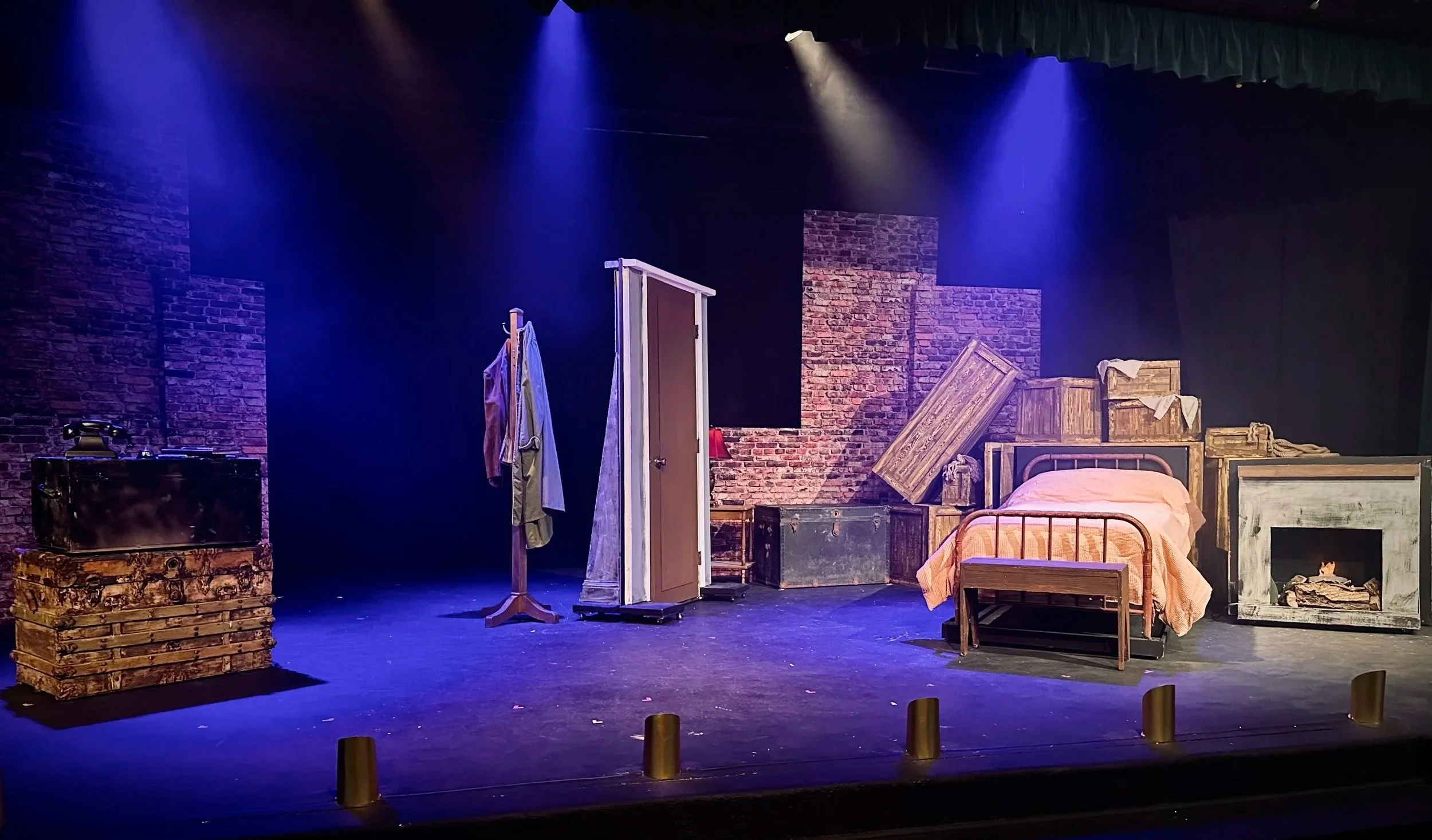
The 39 Steps
Director, Scenic Designer and Construction Lead, Media Designer, Technical Direction
Ice House Theater - Visalia, CA
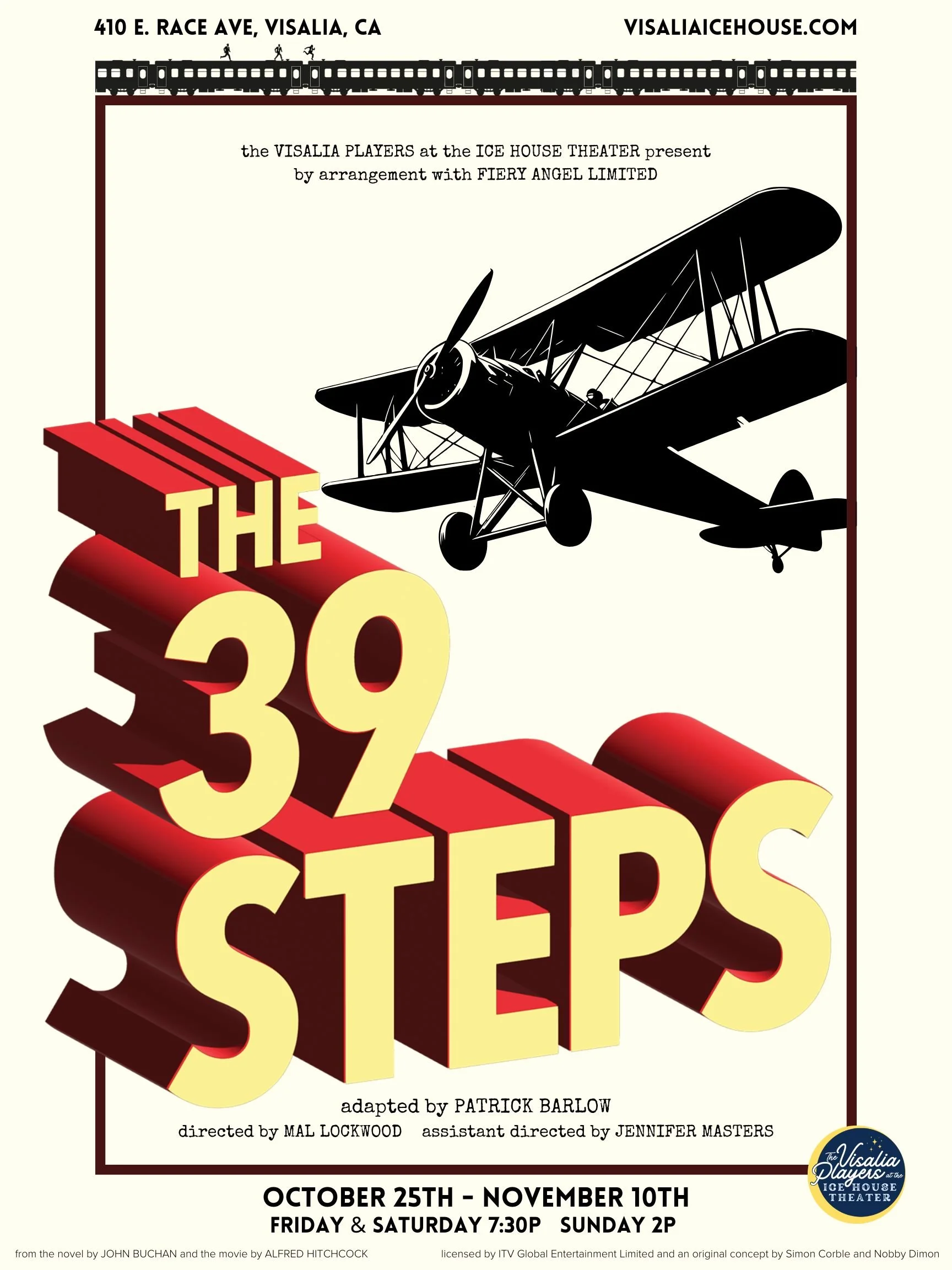
Director: Mal Lockwood
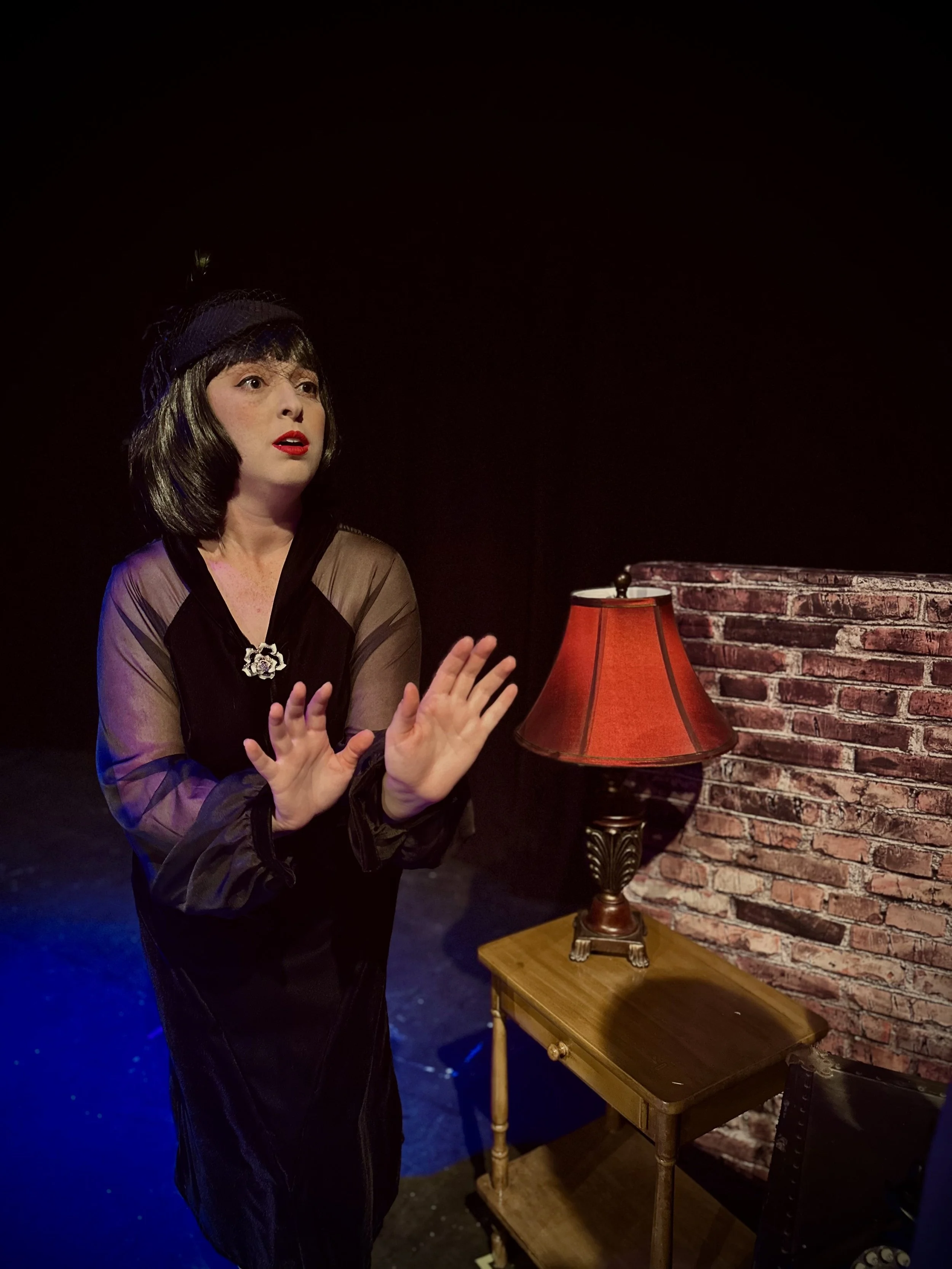
This production of The 39 Steps was conceived as a fast paced theatrical farce built on imagination, precision, and trust. Produced in the same 125- seat community theater environment, the show was realized with a total budget of $2,500 and an entirely volunteer cast and crew.
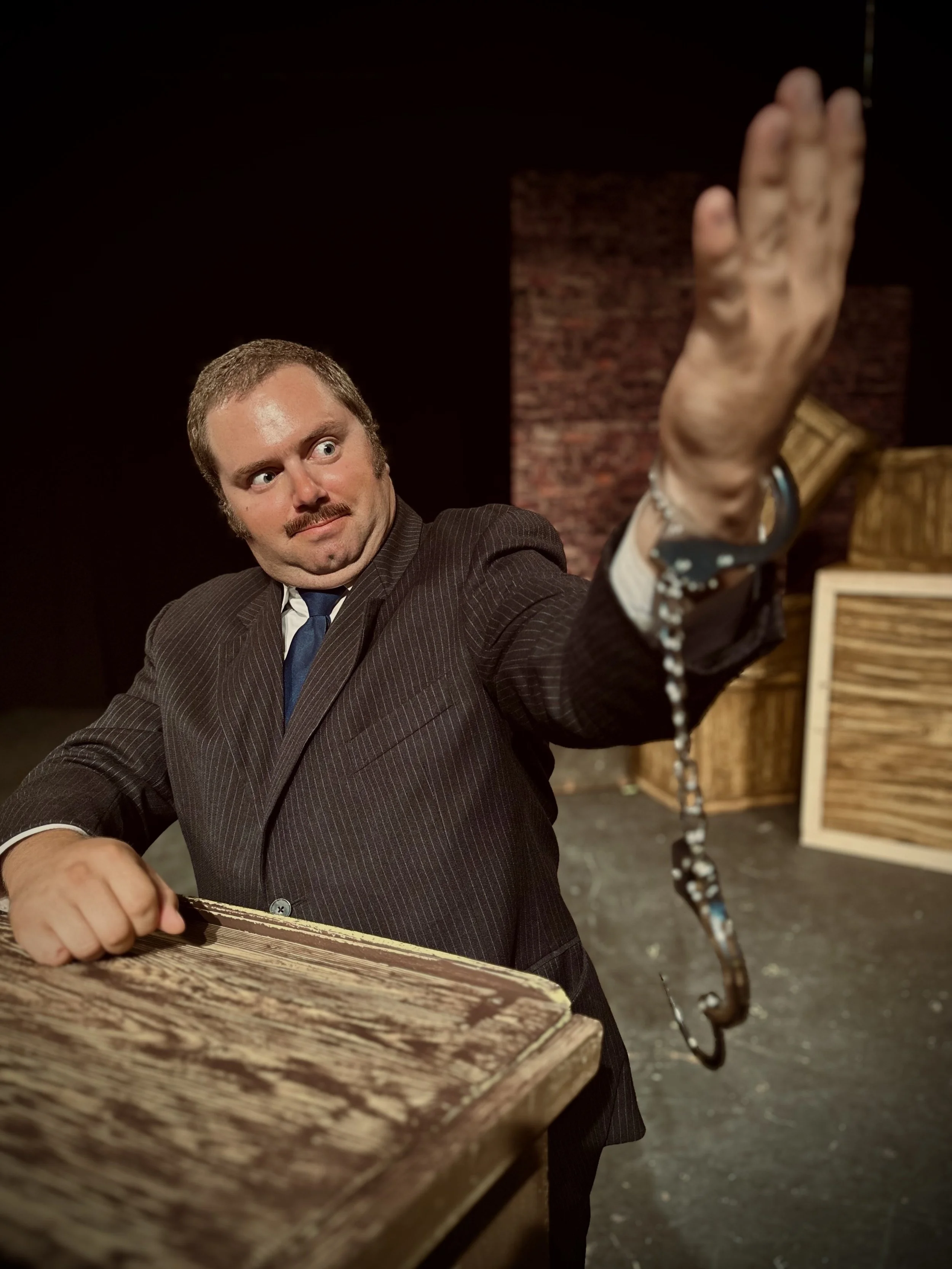
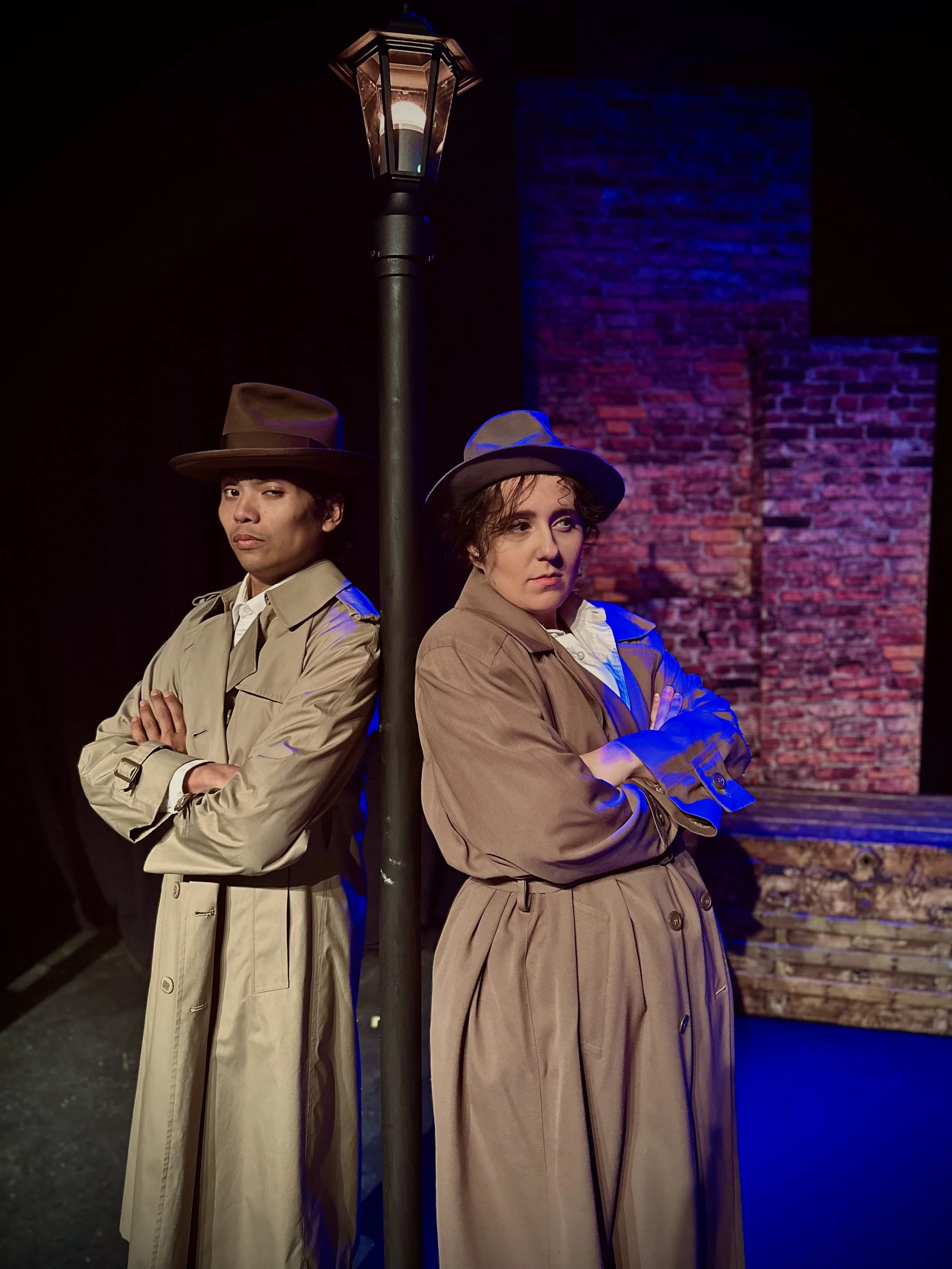
The goal was to tell an epic spy thriller using minimal physical resources while inviting the audience to actively participate in the illusion.
Directorial Concept
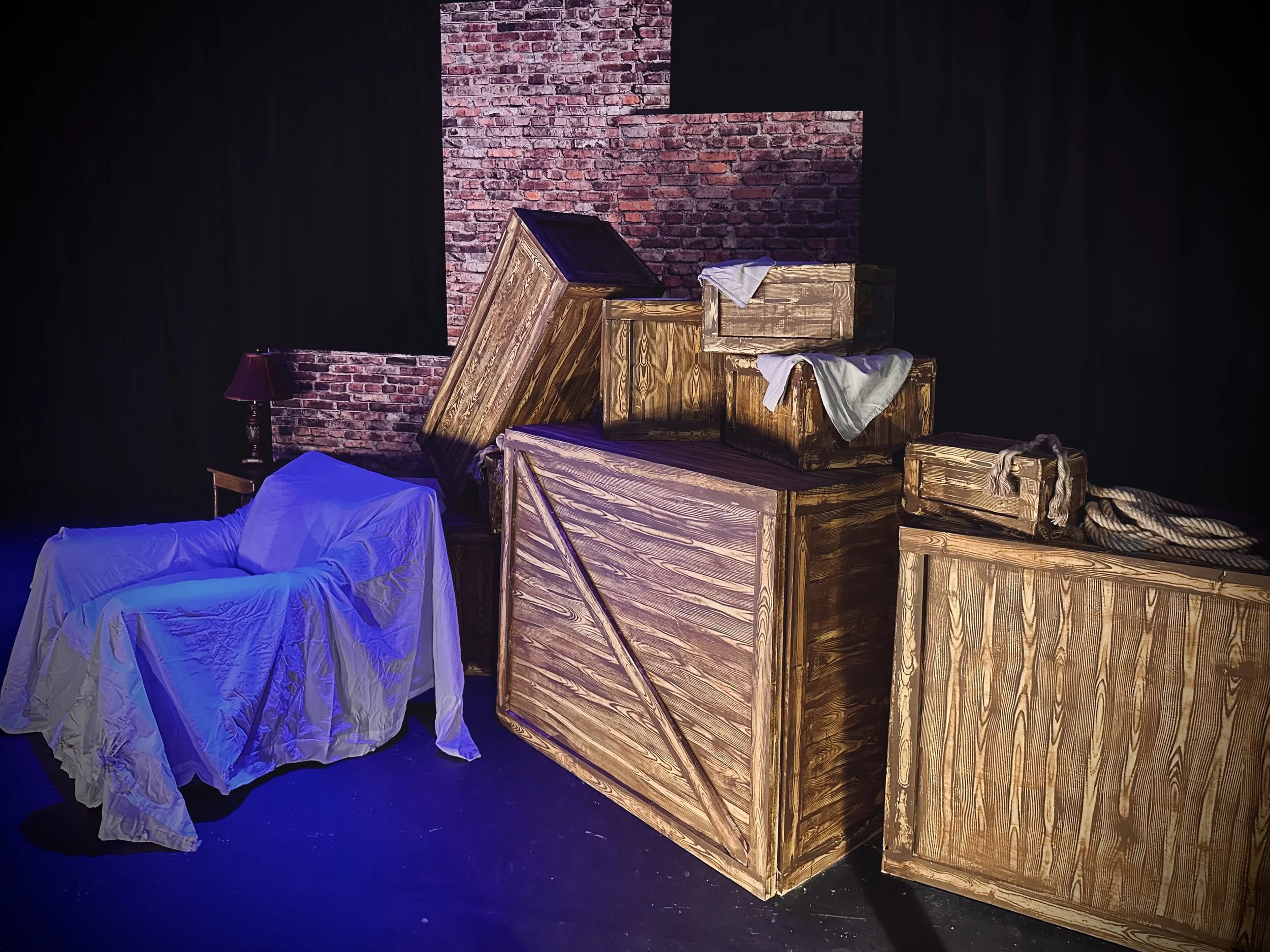
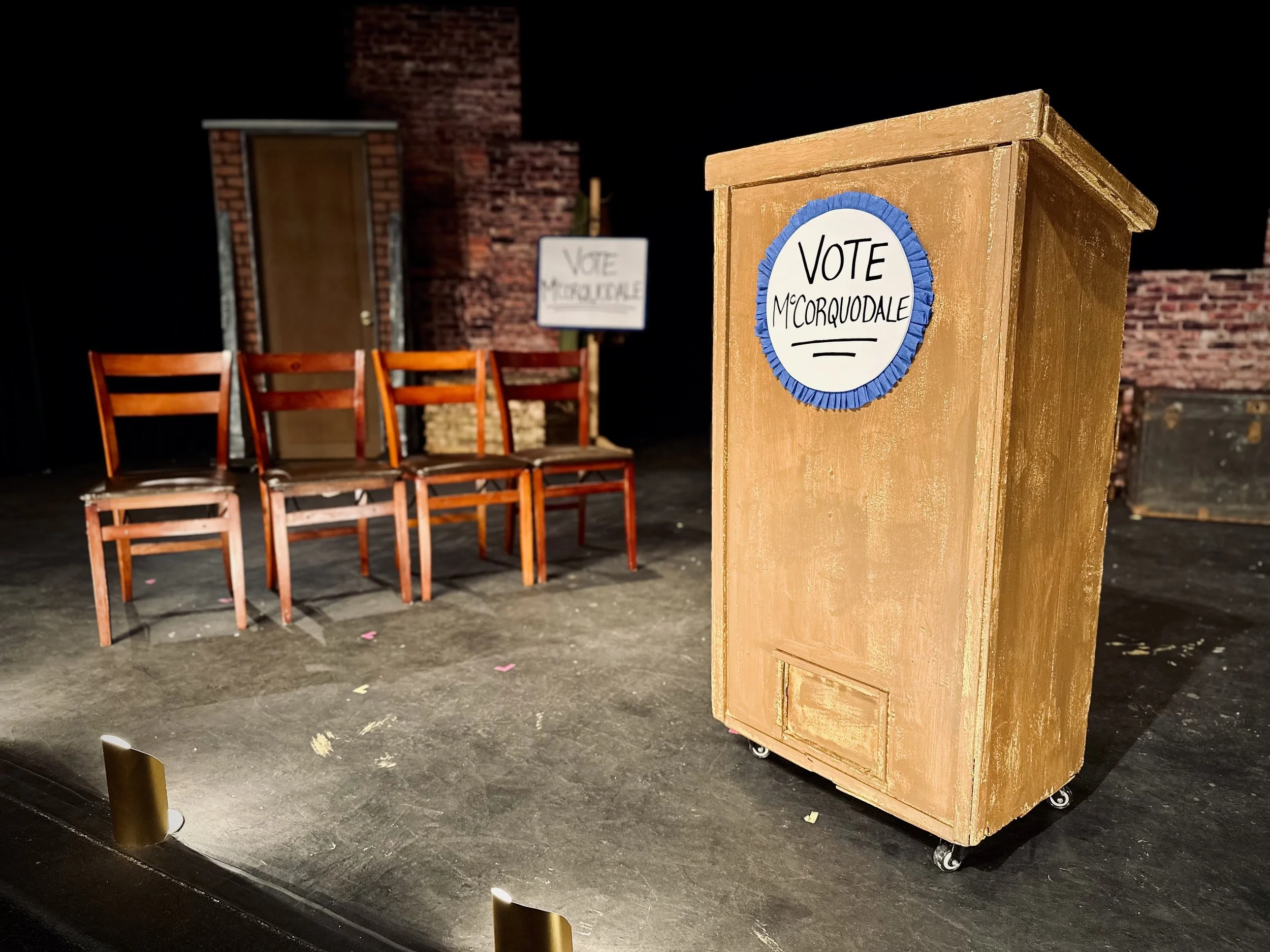
The core concept was to place the audience inside a run down vaudeville theater, as if four performers had arrived early and decided to tell the story using whatever was available. The set was designed to look like a stage in waiting, with exposed brick walls, visible set pieces, and theatrical mechanics in plain sight.
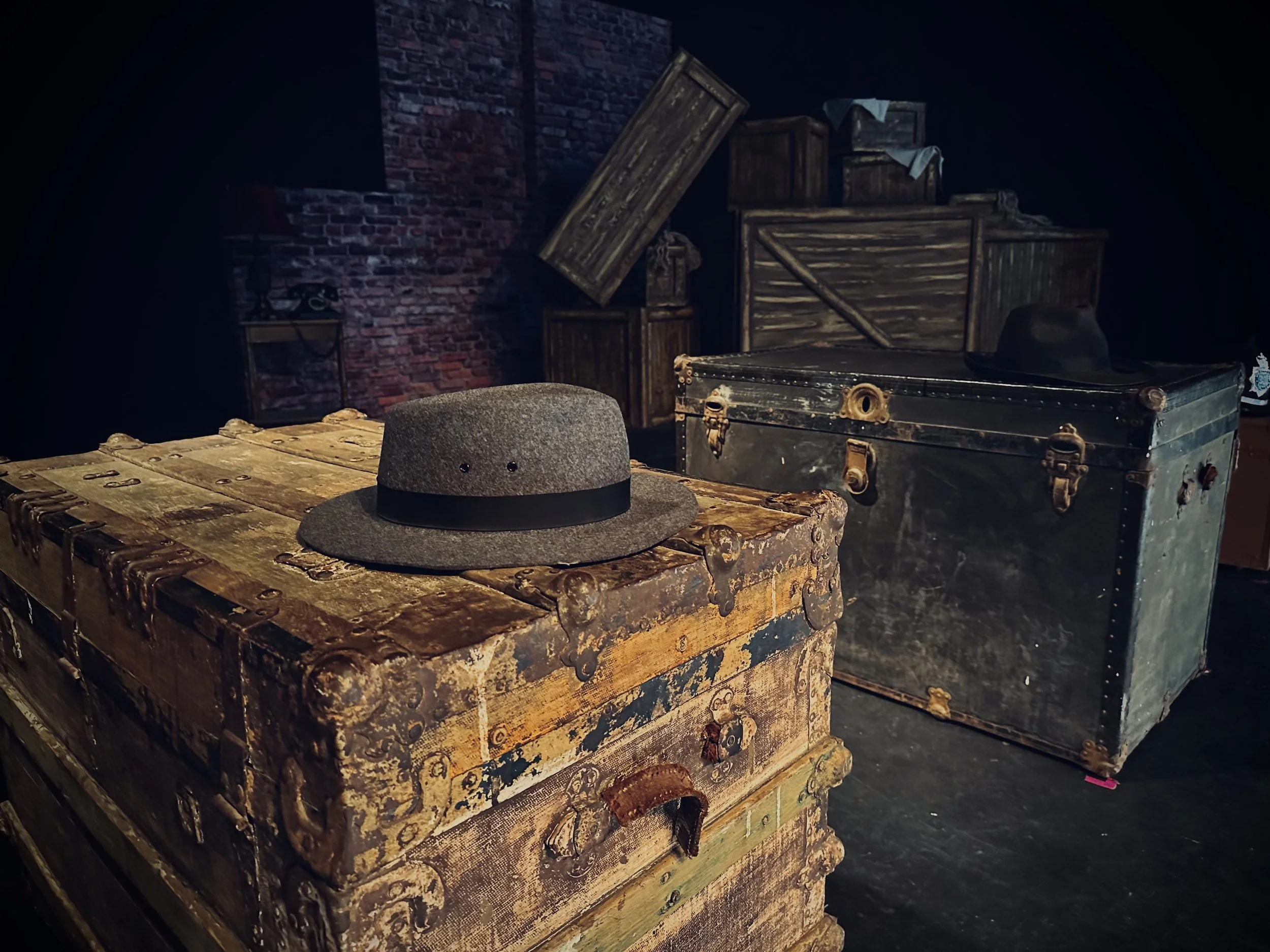
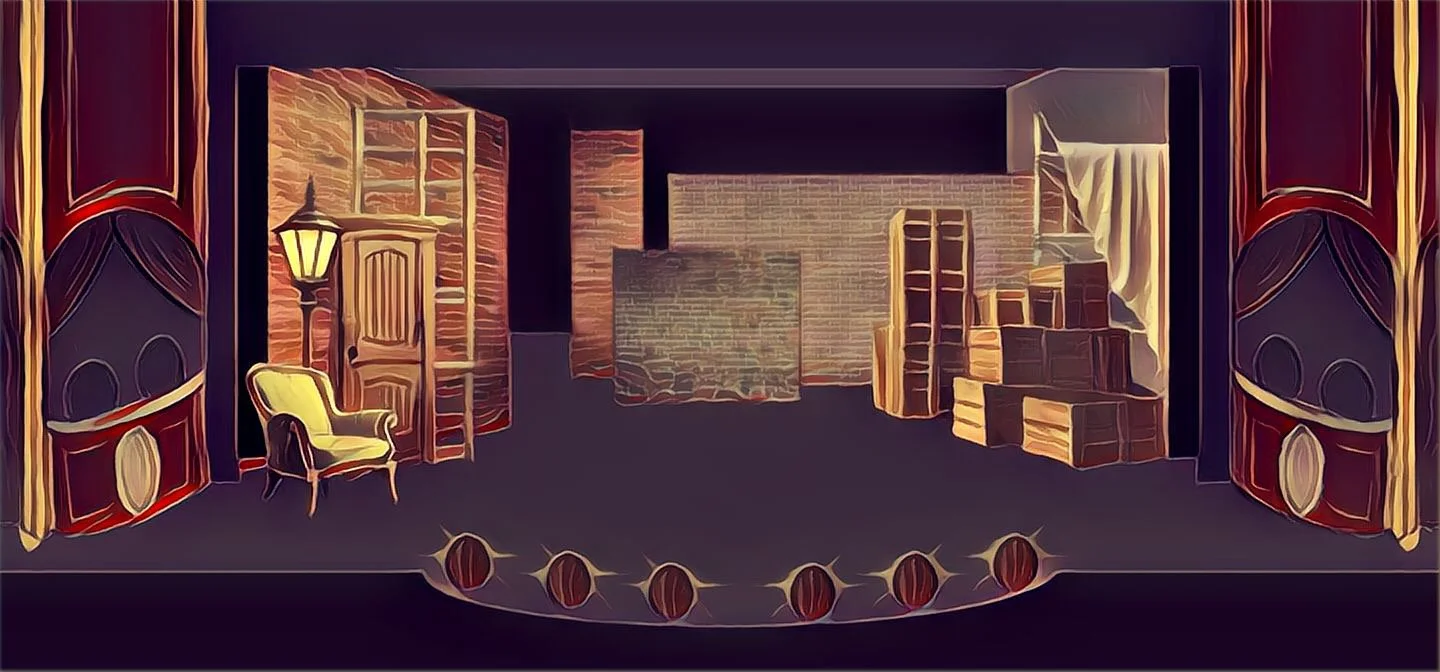
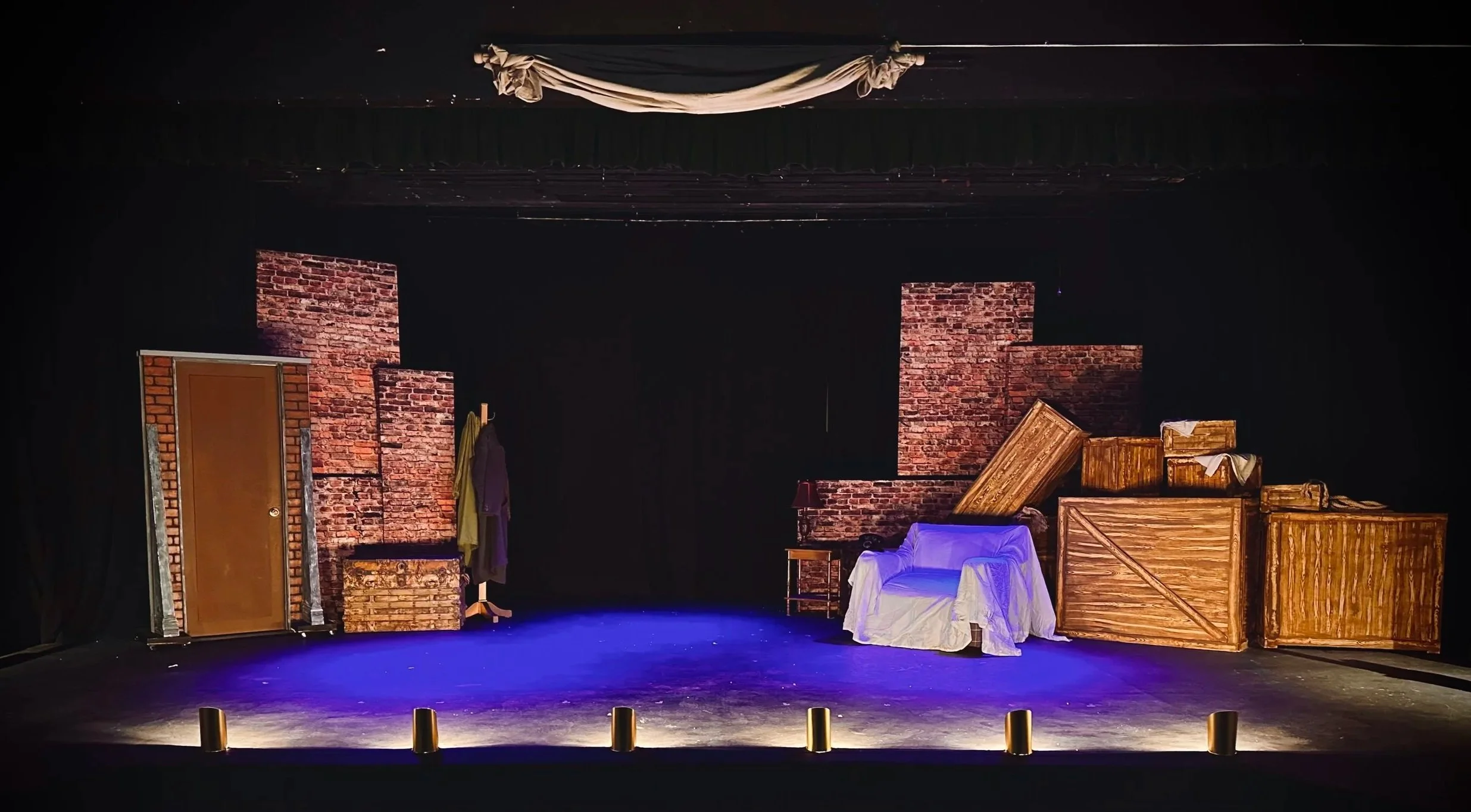
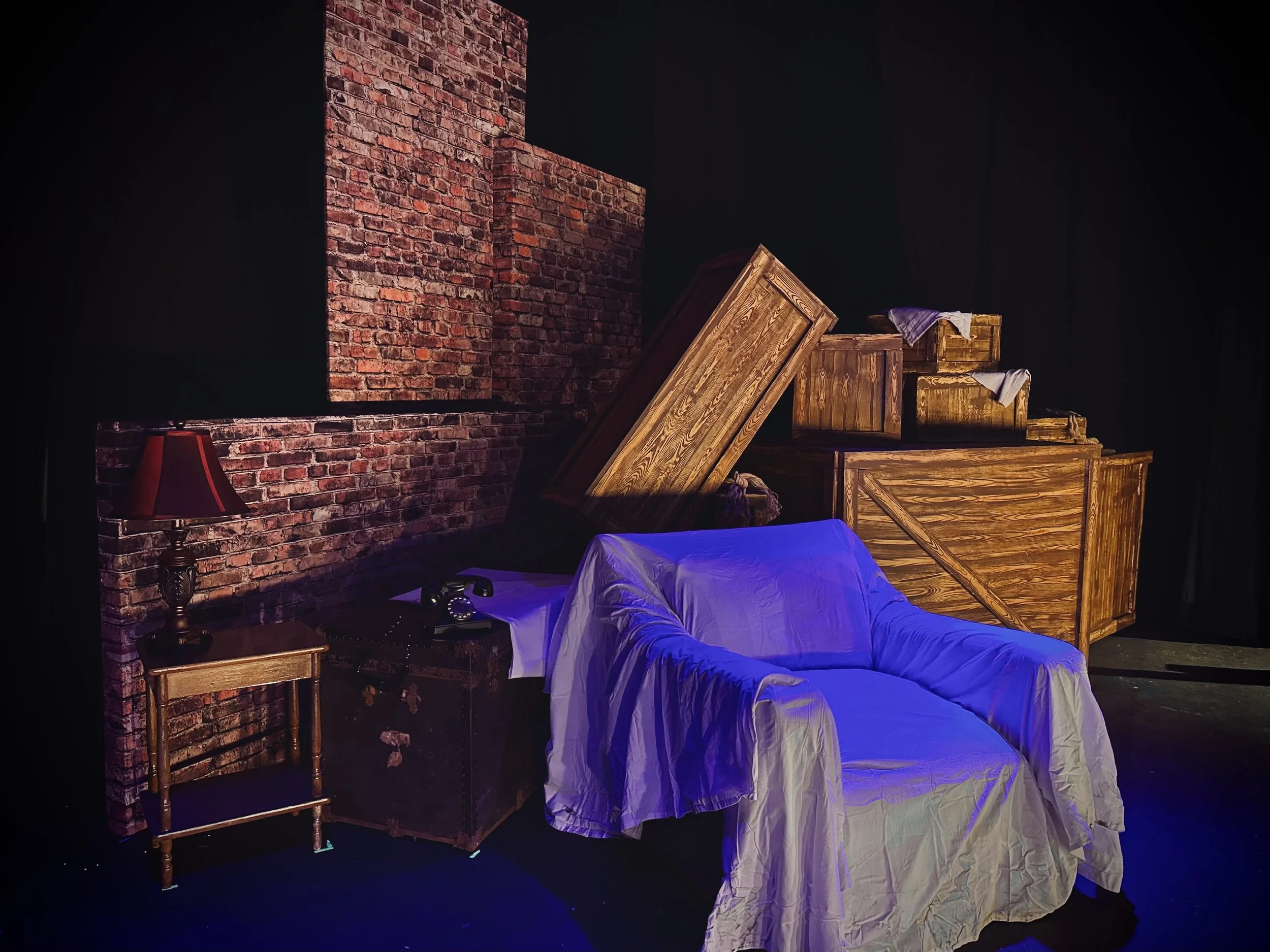
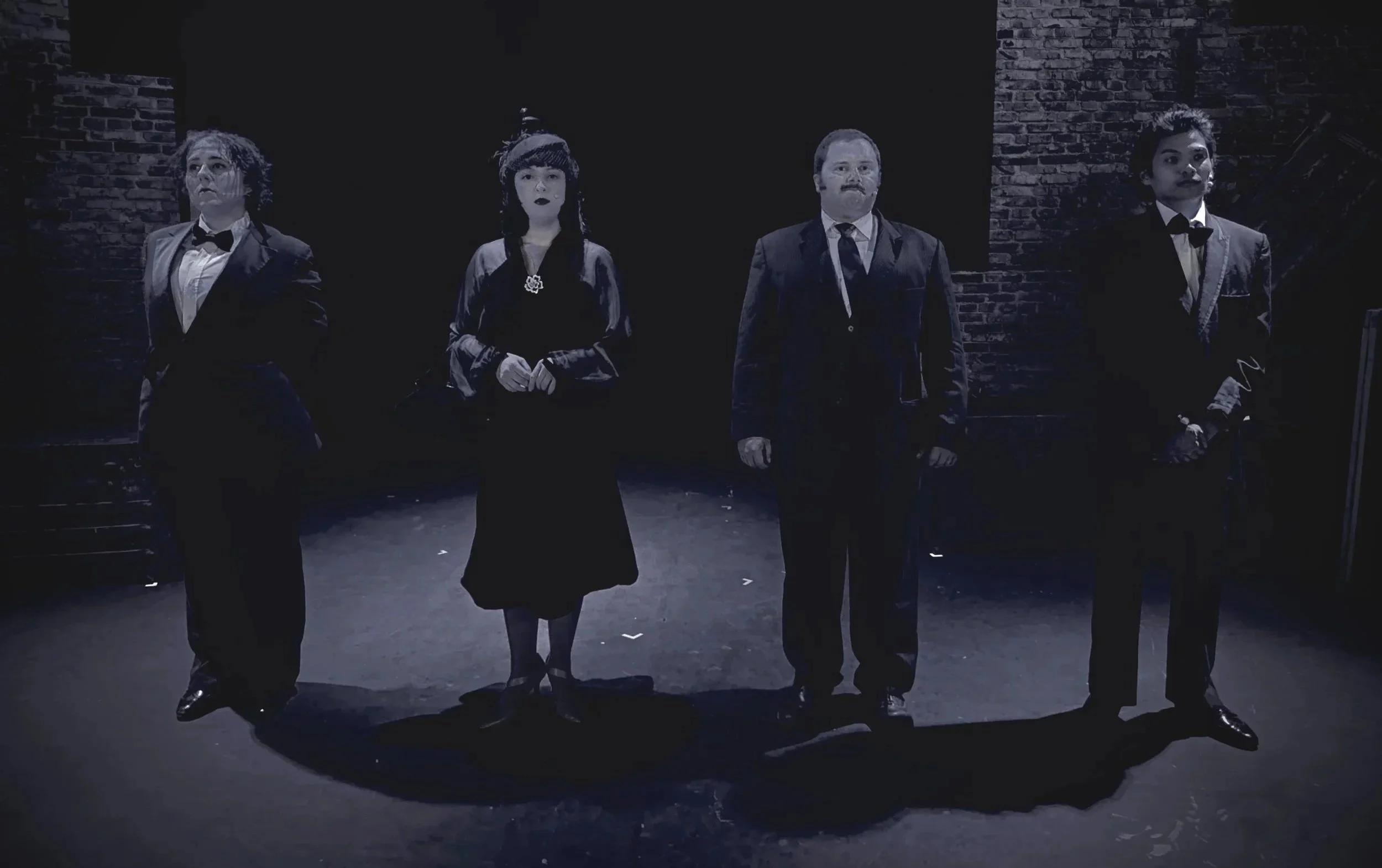
I wanted the audience to feel welcomed into the space and immediately understand the rules of the world. Four actors would use every corner of the stage to play dozens of characters, shift locations at breakneck speed, and deliver a polished farce inside an intentionally rough frame.
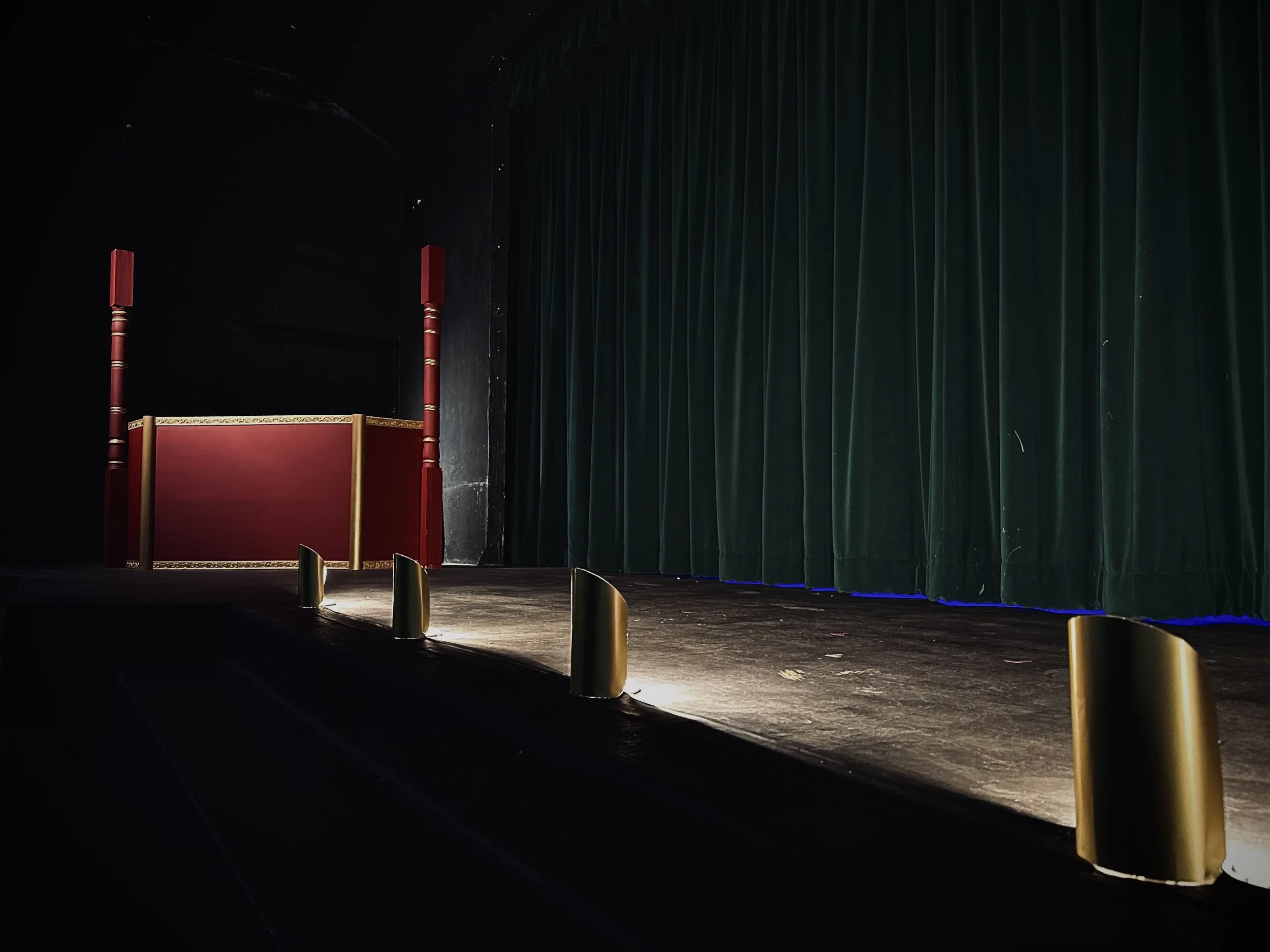
The visual tone was rooted in old English fog, with dark textures, a limited color palette, and accents of gold and deep reds. This allowed the everyman protagonist to stand out against an exaggerated world of espionage, heightening both comedy and contrast.
Scenic Design and Transformation
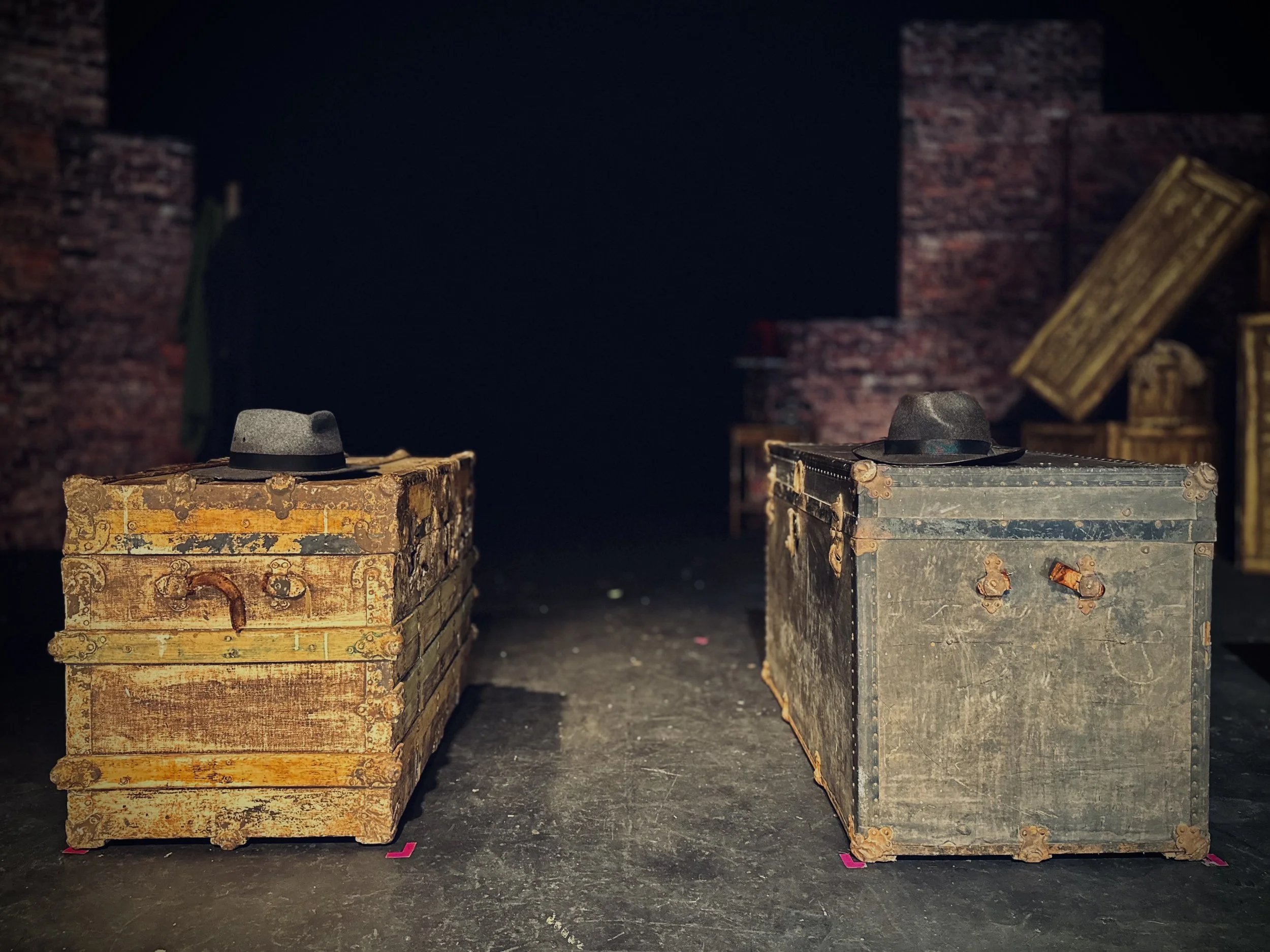
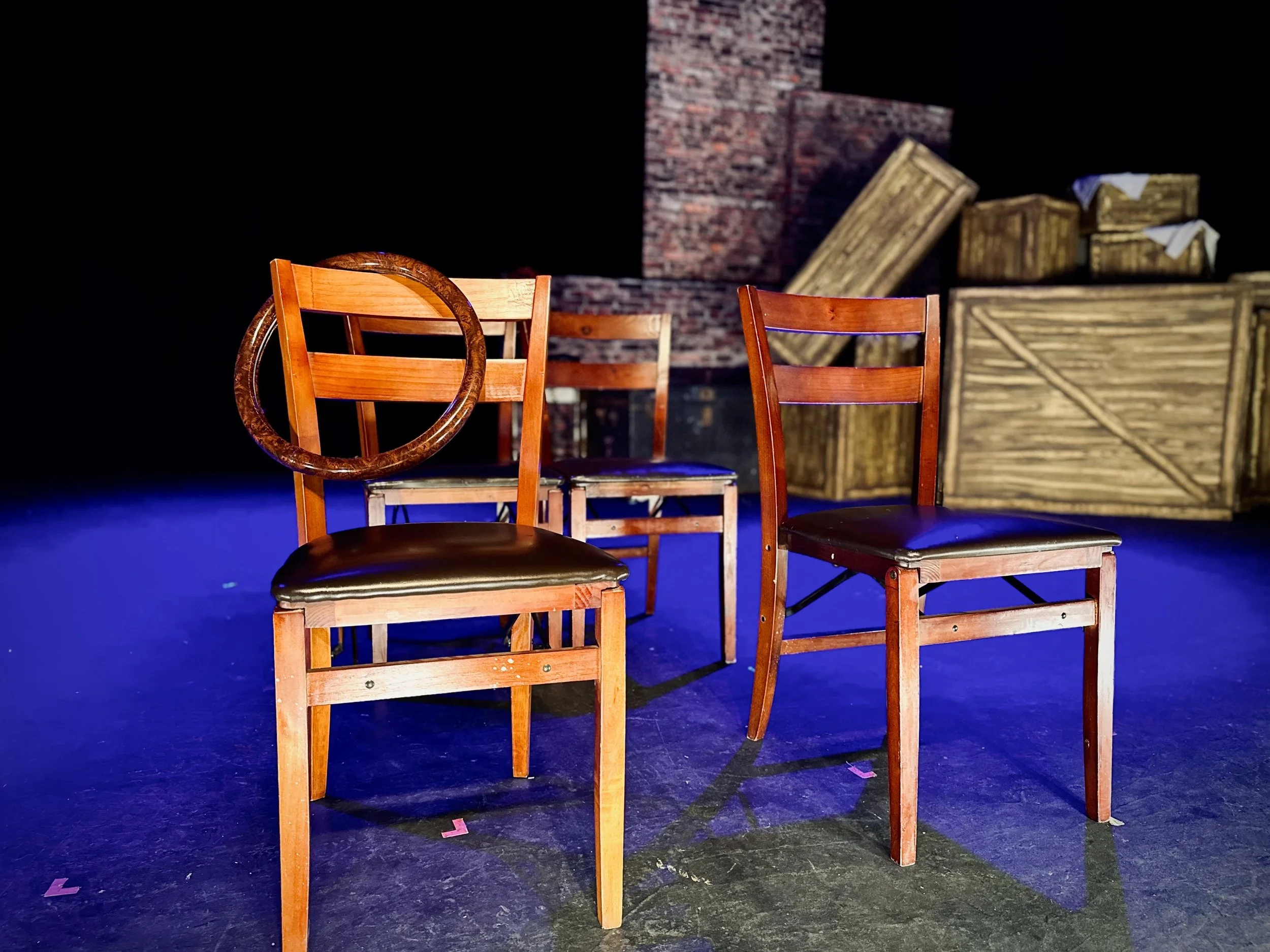
The unit set functioned as a flexible vaudeville environment with hidden surprises. Large crates stacked on stage left appeared to be simple storage until they opened to reveal a practical twin bed and fireplace, instantly transforming the space into a hotel room in Act Two. Steamer trunks represented an entire train sequence, but stacked up they became the hotel front desk.
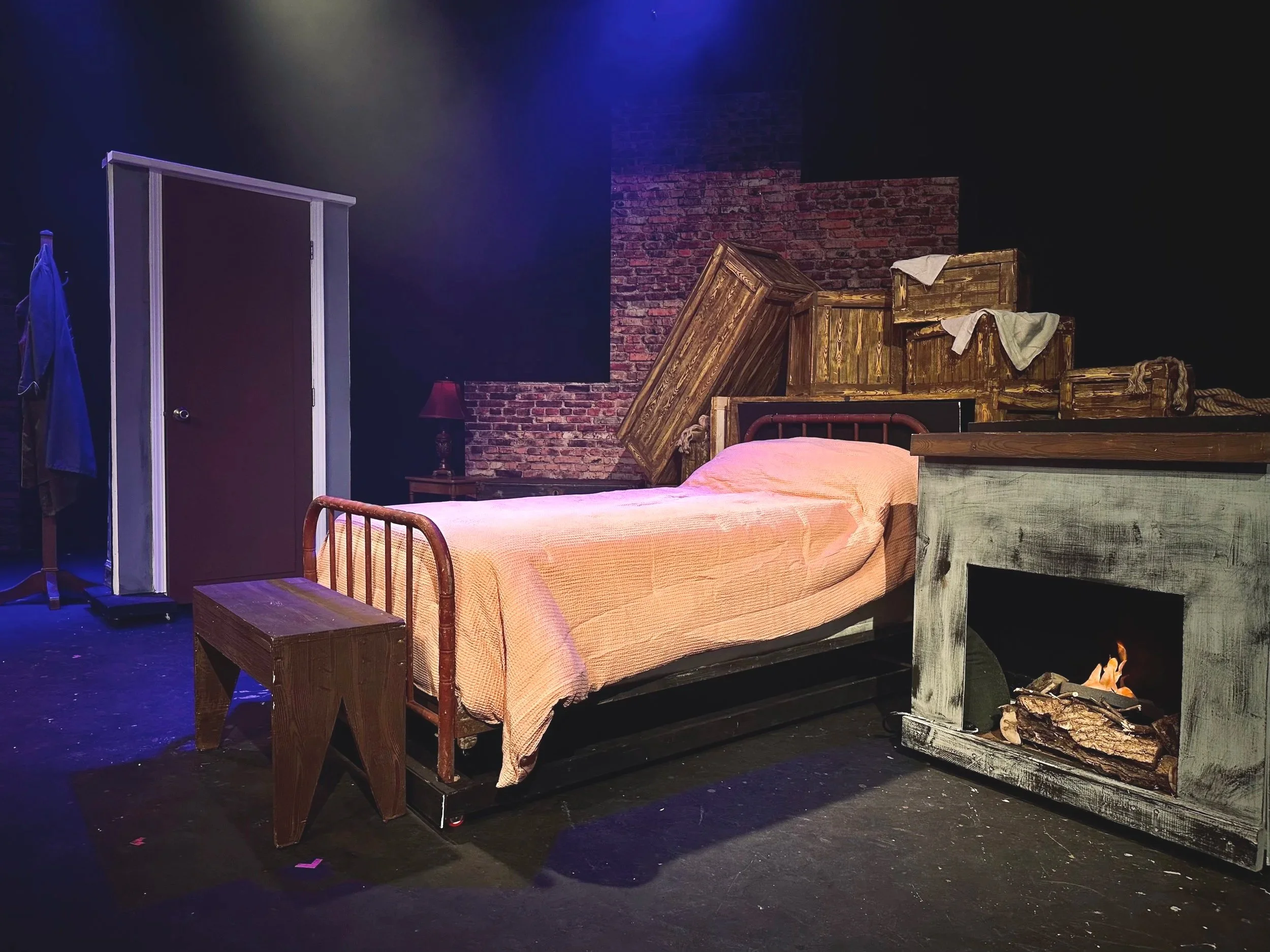
Locations were established with minimal elements and precise direction. Richard Hannay’s flat consisted of a chair and a window. Professor Jordan’s study was a door and another chair. The Scottish moors were represented by a simple stile rolled on by the crew.
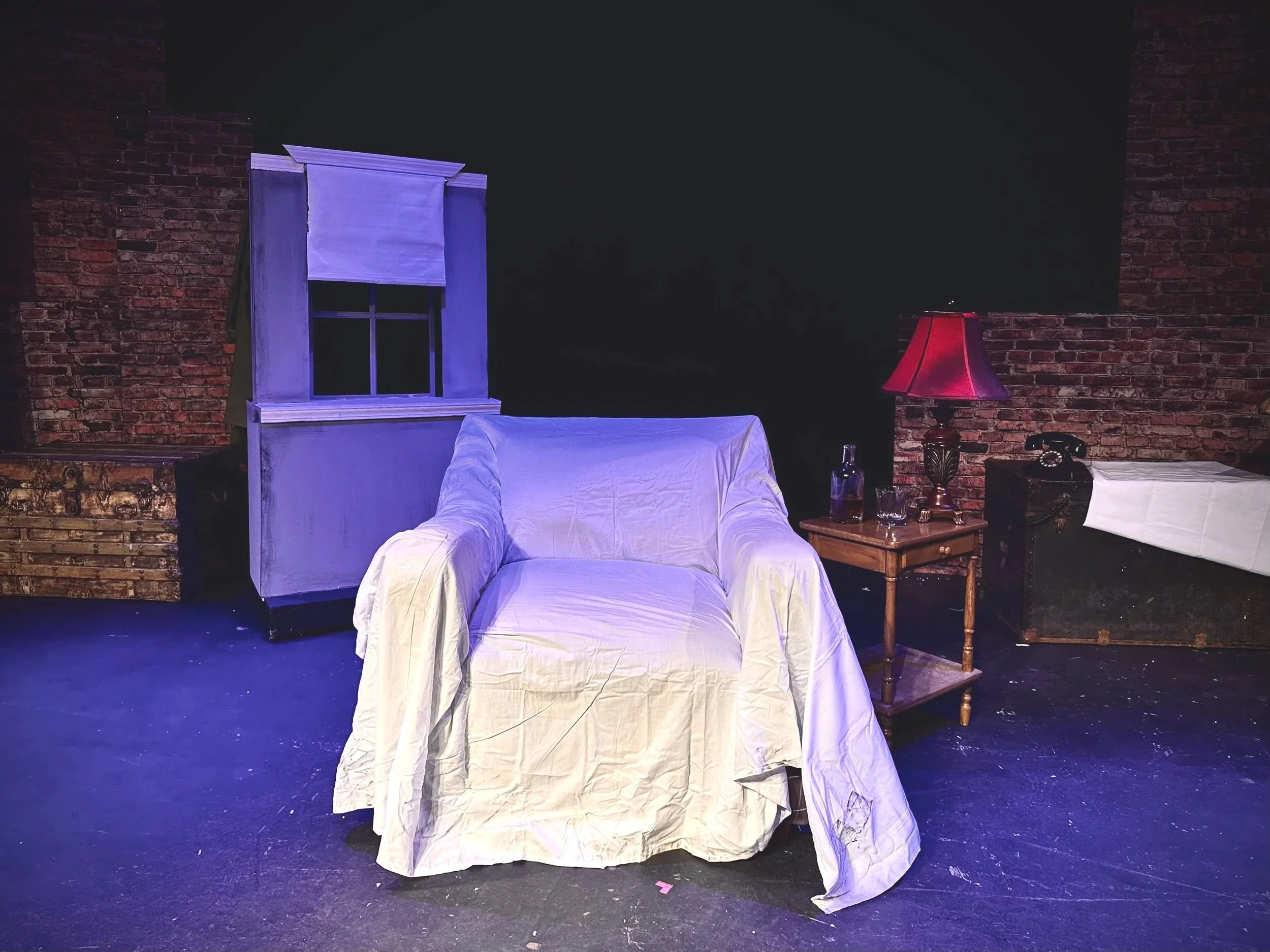
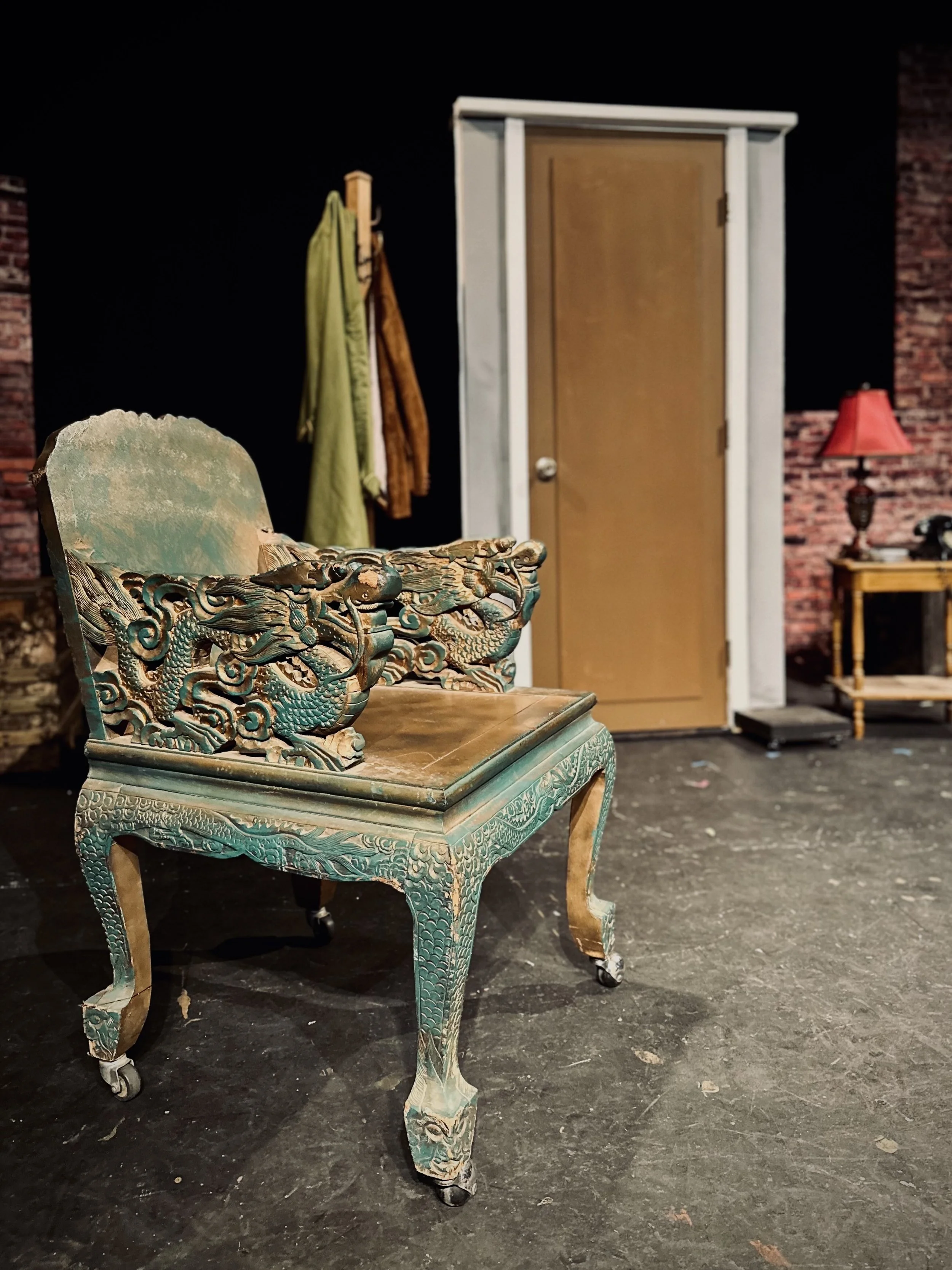
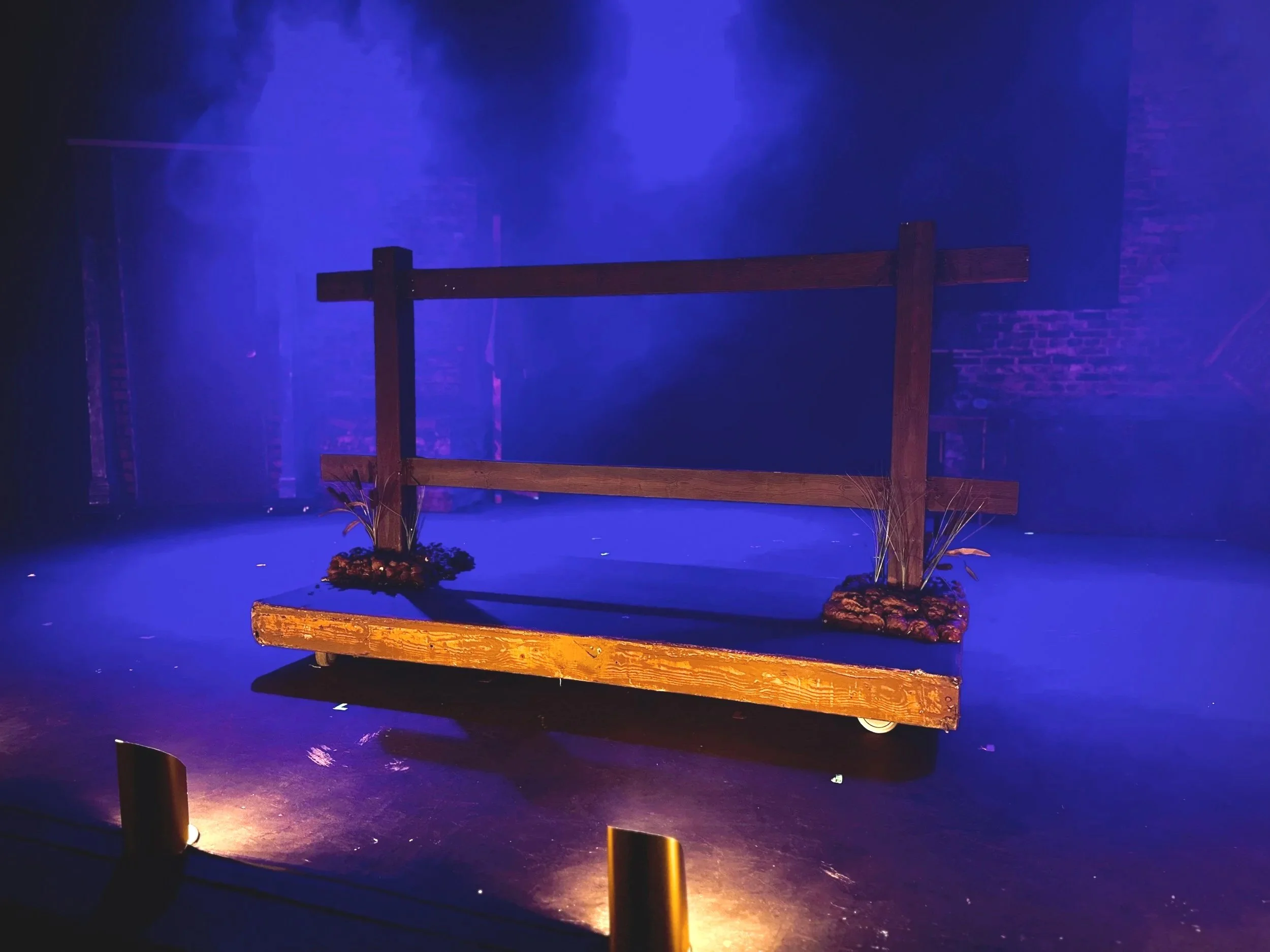
Rather than adding complexity, I leaned into theatrical shorthand and trusted the audience to complete the picture.
Media Integration and Problem Solving
Projections were used selectively and intentionally. A front of house projector enhanced the train chase sequence with rushing wind and movement across the entire stage, increasing energy without adding physical scenery.
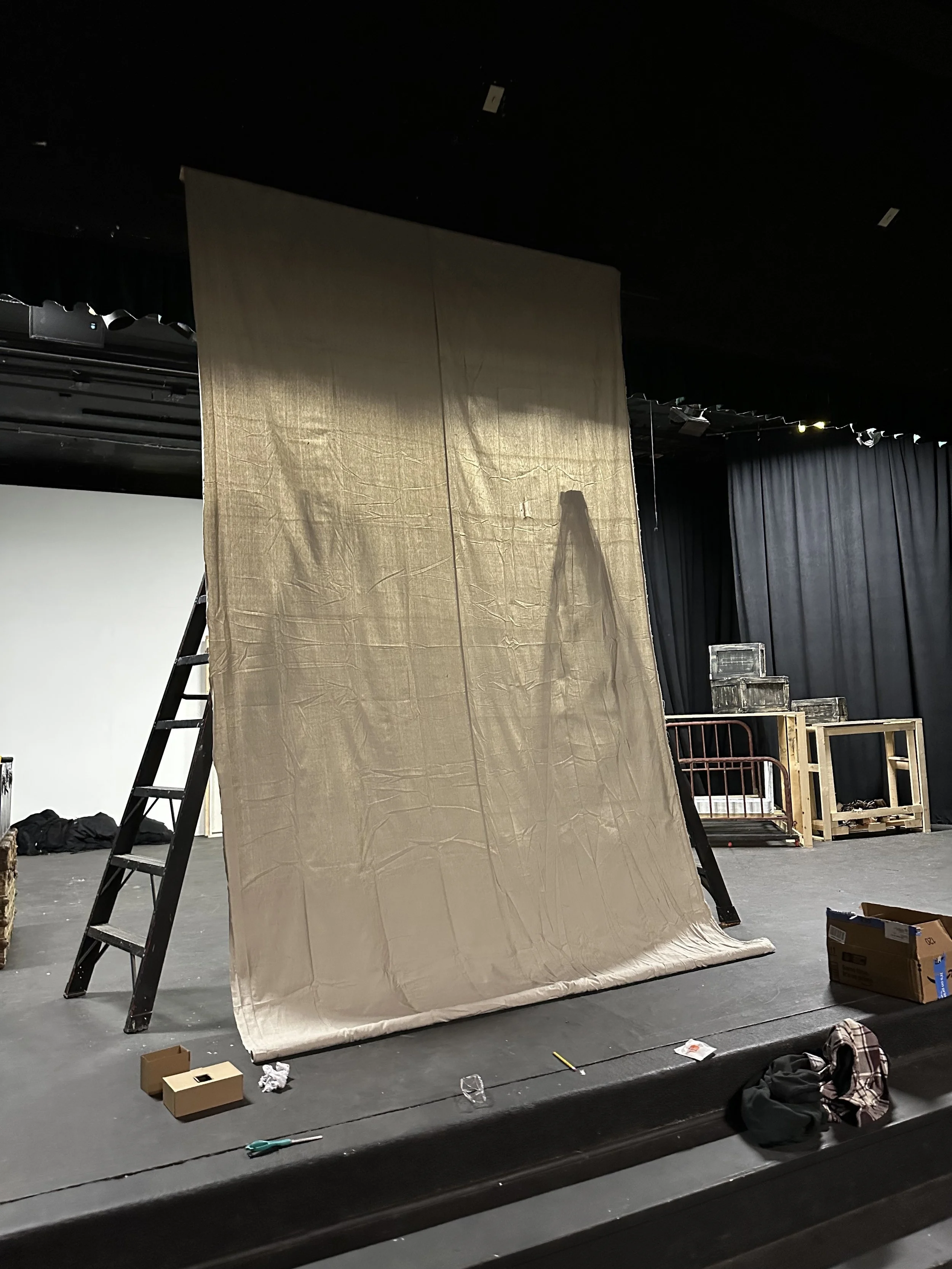
A roll down projection screen was introduced to solve multiple challenges at once. On a Broadway scale, certain moments are staged using shadow play and puppetry. With limited resources, that approach was impractical. Instead, I directed and produced short newsreel style films that played during these transitions.
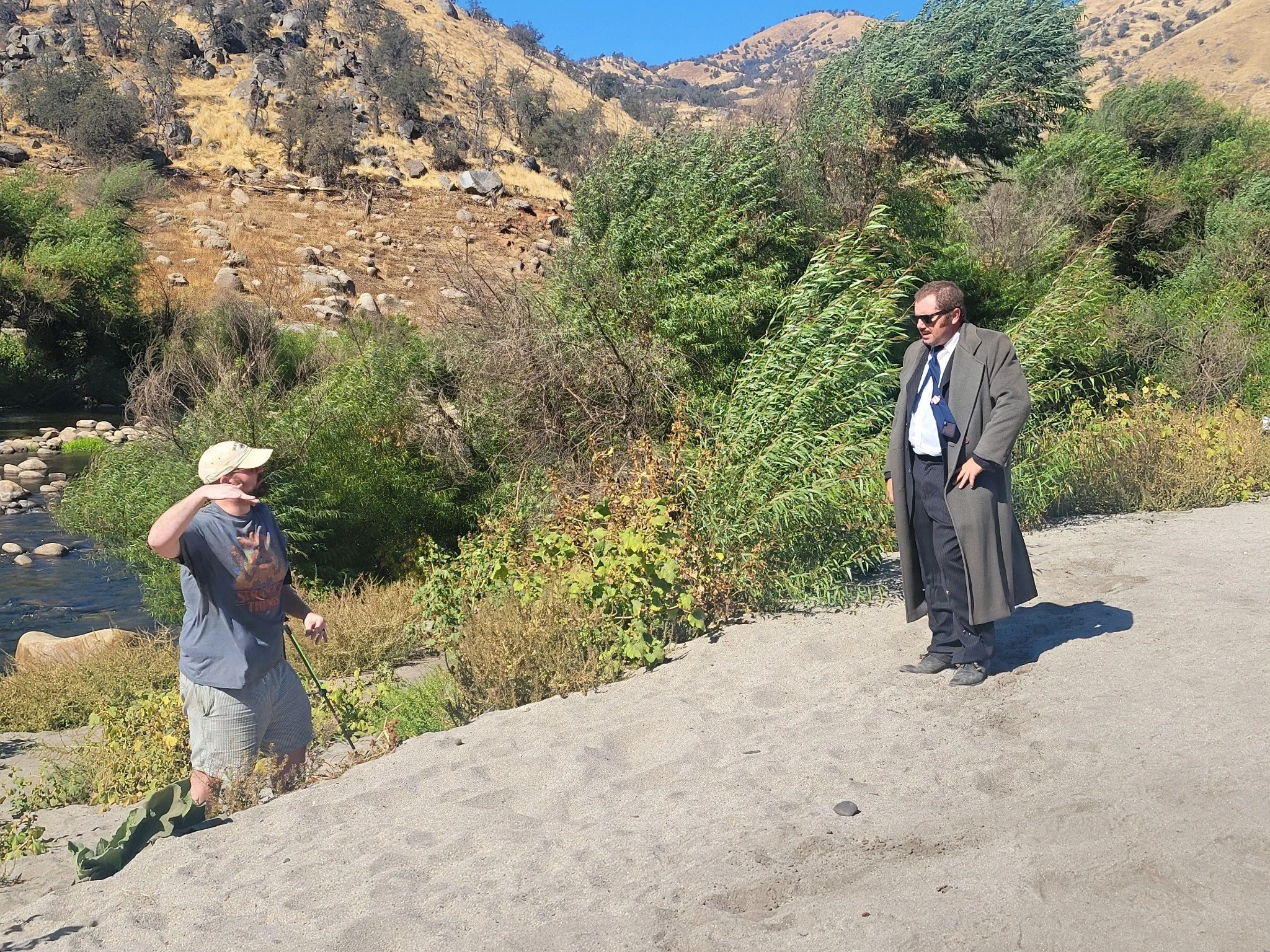
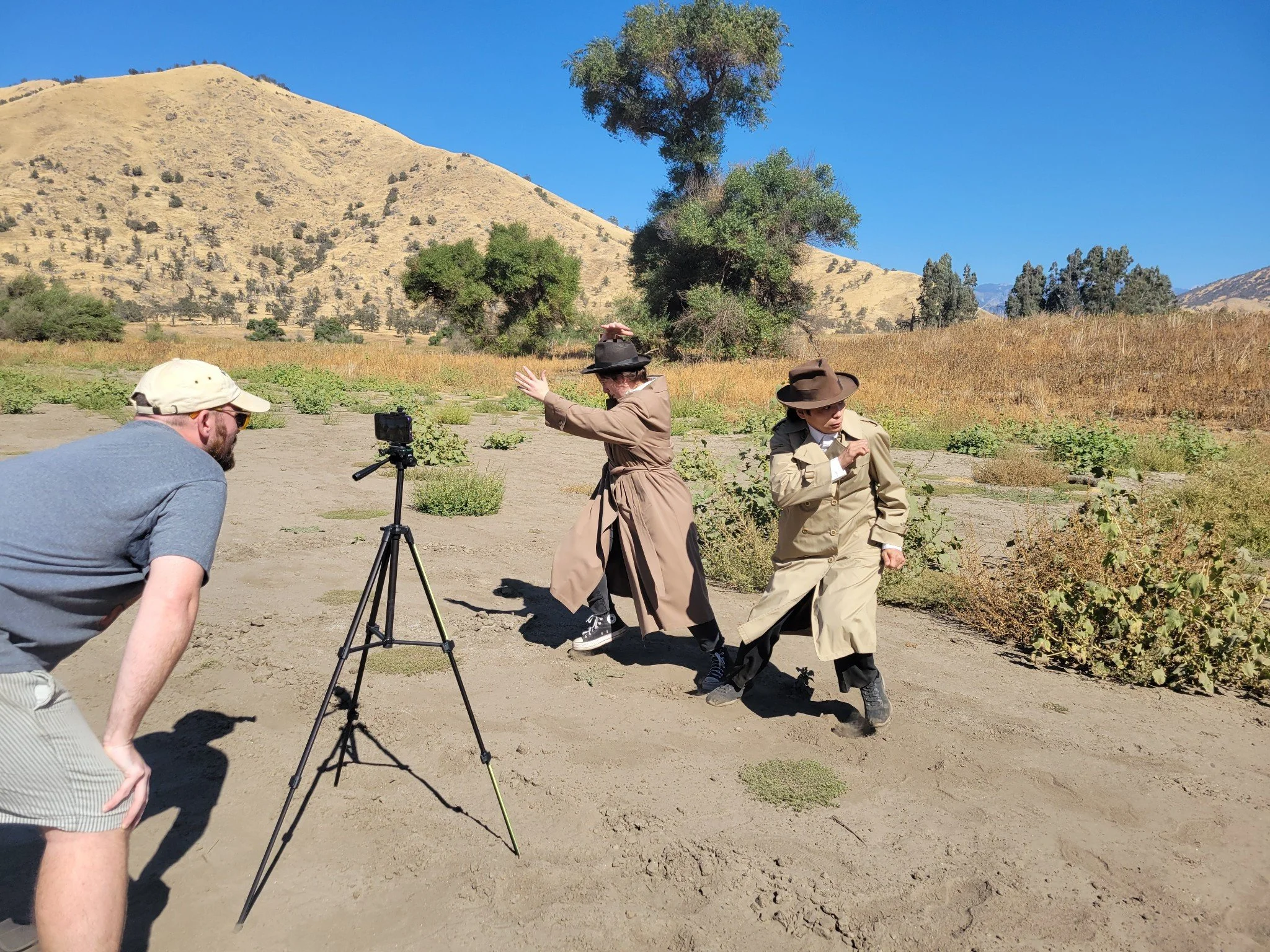
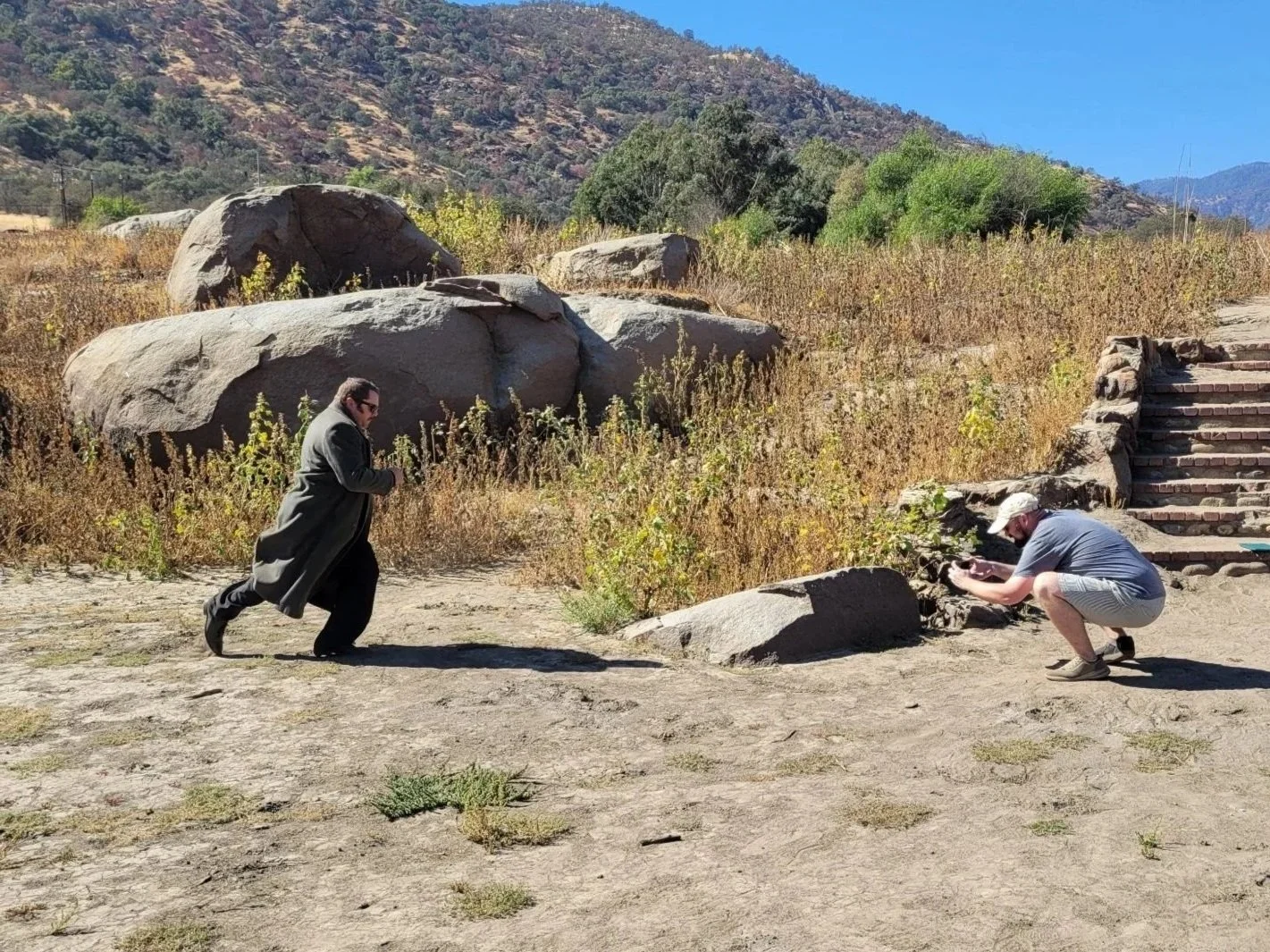
We filmed on location in the foothills of the Sierra Nevada to create black & white footage inspired by classic spy films. These segments allowed for seamless scene changes, supported storytelling, and added a cinematic layer that audiences responded to strongly.
Outcome and Reflection
Audiences responded with laughter and engagement from start to finish. The complexity of the storytelling never overwhelmed the clarity of the performance, and the minimal design choices allowed imagination to do the heavy lifting.
Balancing direction and technical leadership required a clear process and trust in collaborators. I worked closely with my assistant director and cast of four, investing time in mime training, physical comedy, and precision blocking to ensure complex sequences could be executed reliably.
I led a volunteer build crew of four and collaborated with dedicated lighting and sound designers, operators, and technicians. I gave the stage crew agency to solve problems in ways that worked best for them, creating a shared sense of ownership over the production.