The Hunchback of Notre Dame
Technical Director, Scenic and Media Designer, Audio Engineer
Ice House Theater - Visalia, CA
Director: Kelly Ventura
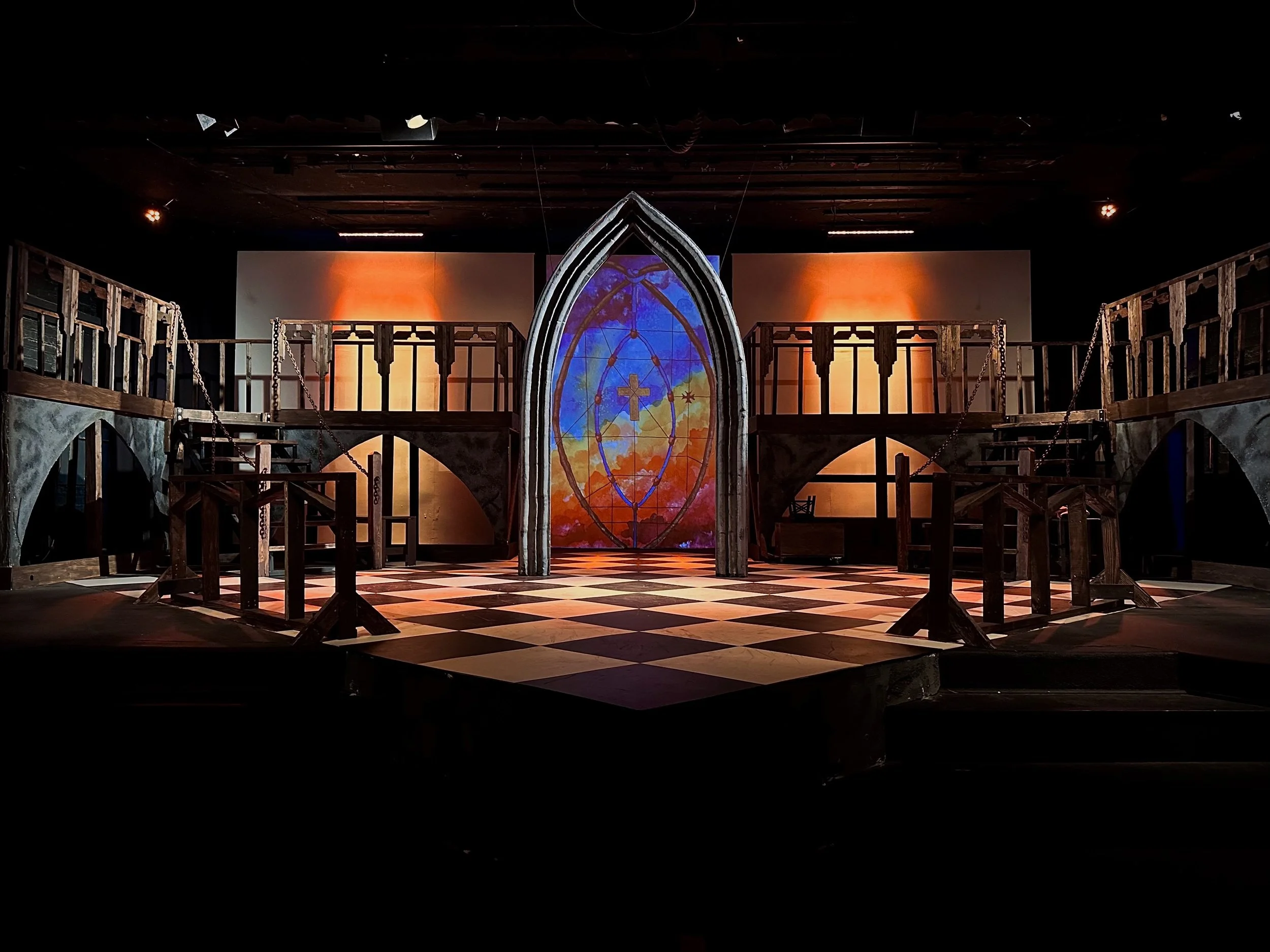
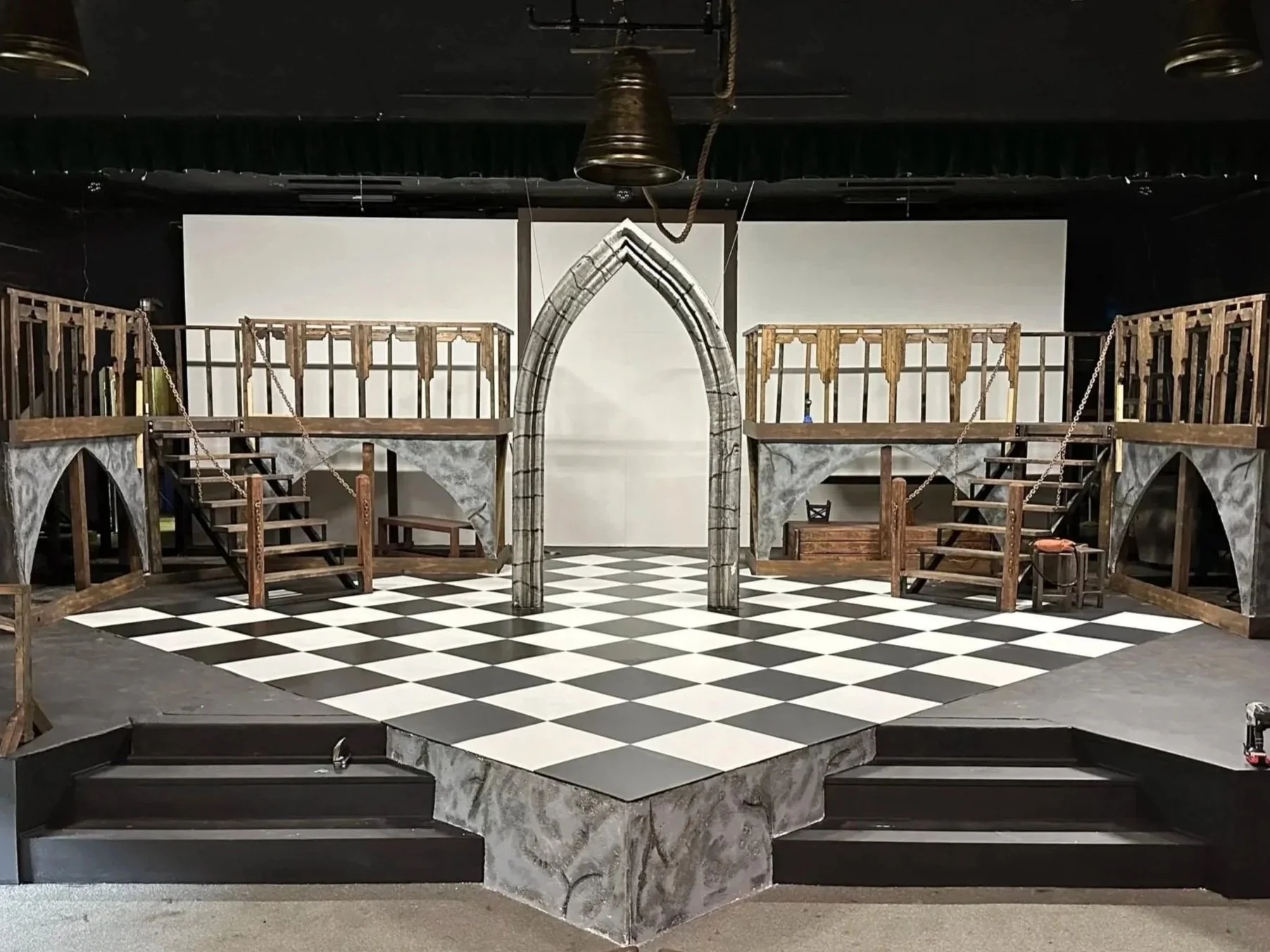
This production of The Hunchback of Notre Dame was designed as a large scale, immersive experience within a small community theater environment. Performed in a 125-seat venue with a strict budget of $4,000 and an entirely volunteer team, the goal was to achieve a sense of grandeur without overwhelming the audience or the performers.
The guiding idea behind the design was simple and thematic: don’t judge a book by its cover. I wanted the set to feel monumental at first glance, while remaining flexible and intimate enough to support the emotional core of the story.

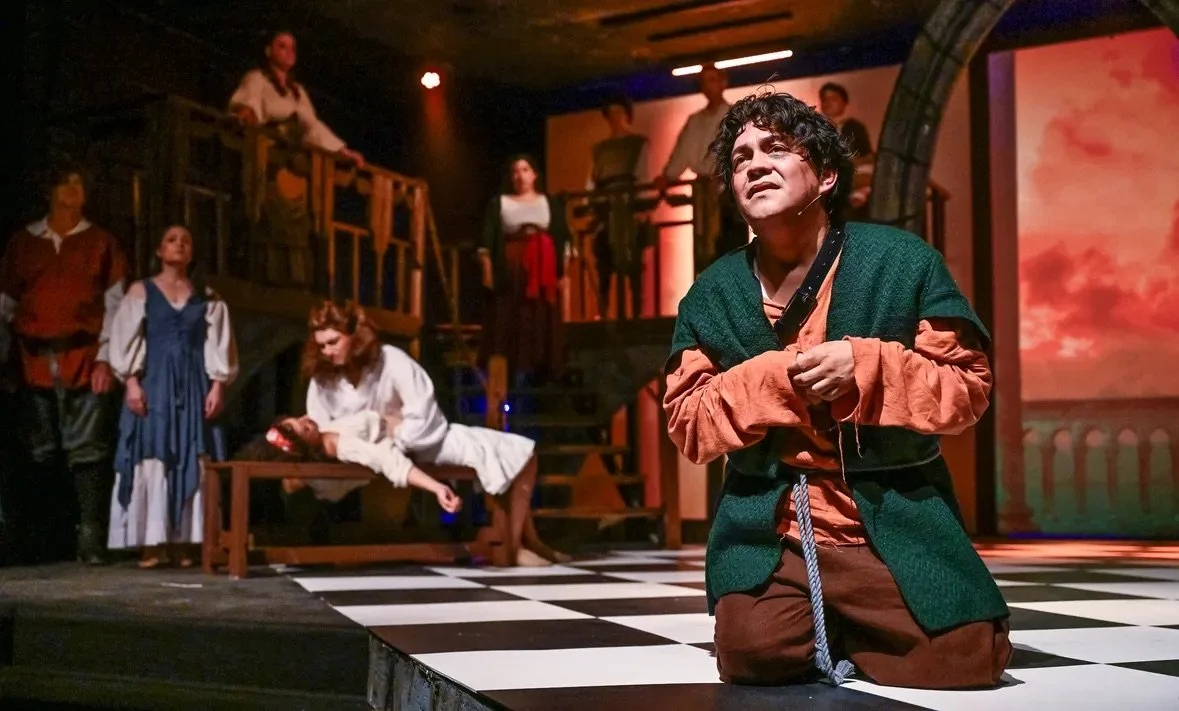
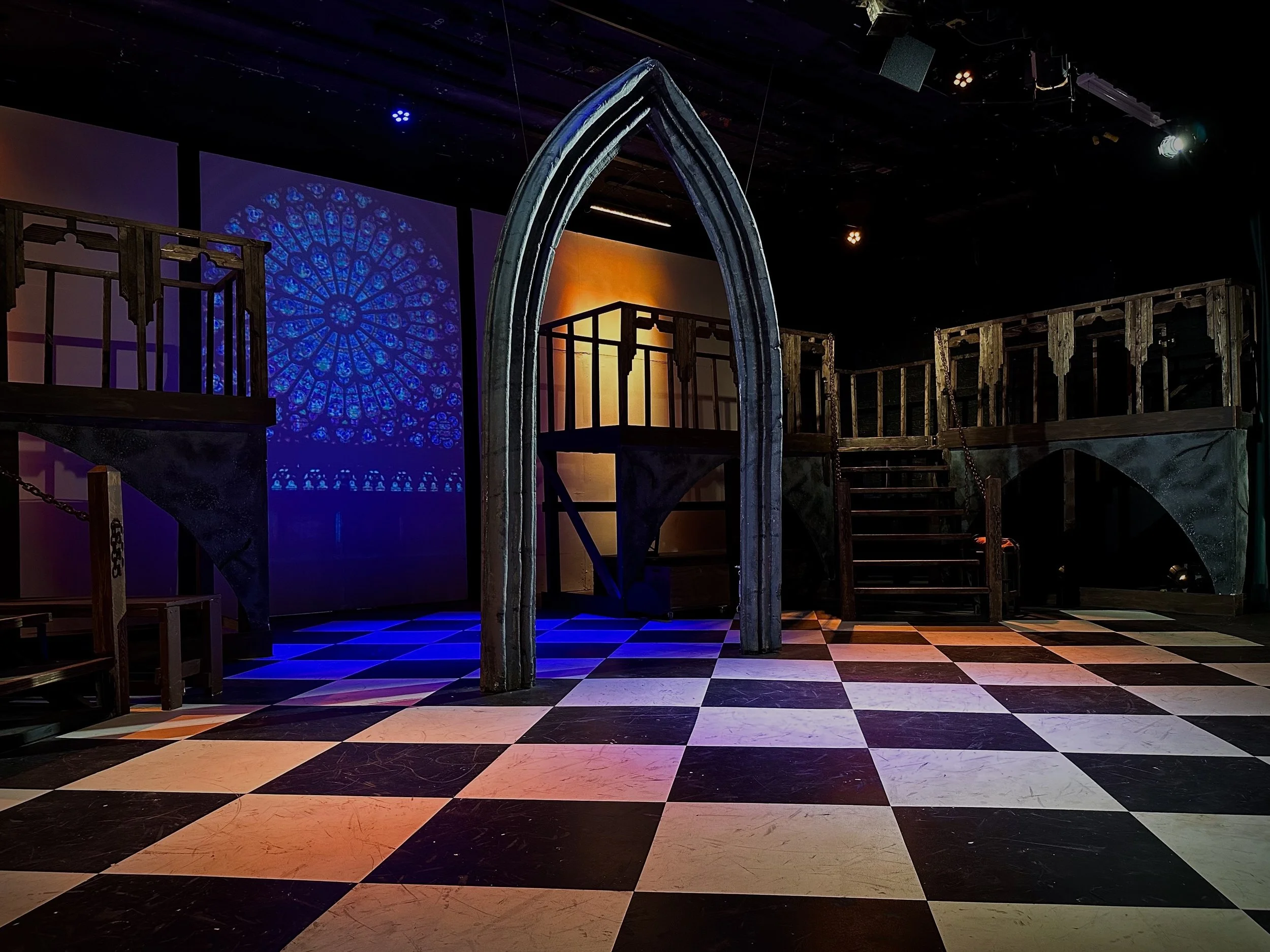
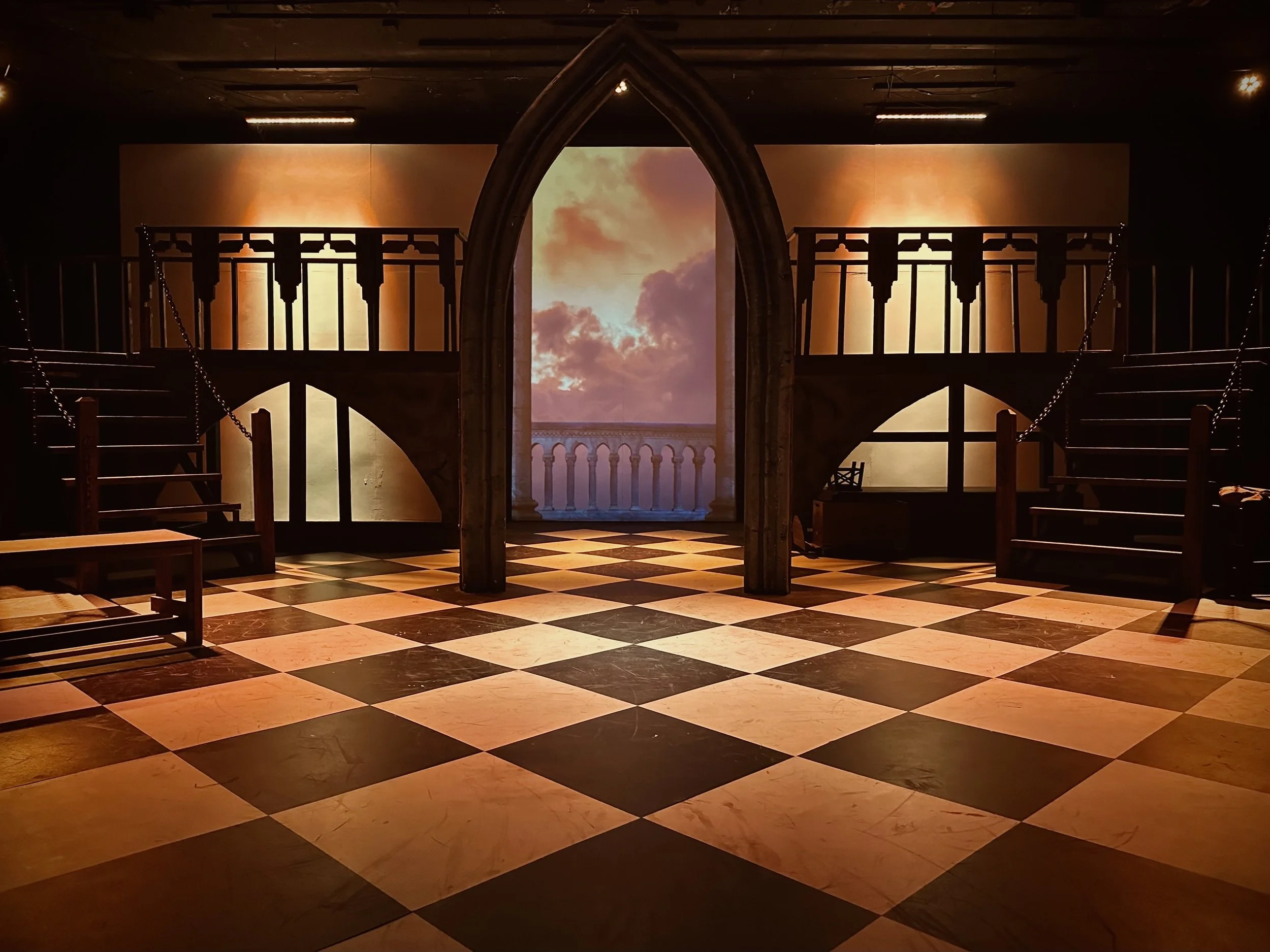
To extend the environment beyond the physical limits of the stage, I integrated projection and media as architectural storytelling tools rather than decorative elements. The projections acted as digital extensions of the set, allowing the space to expand vertically and emotionally without requiring scene changes.
Concept and Design Approach
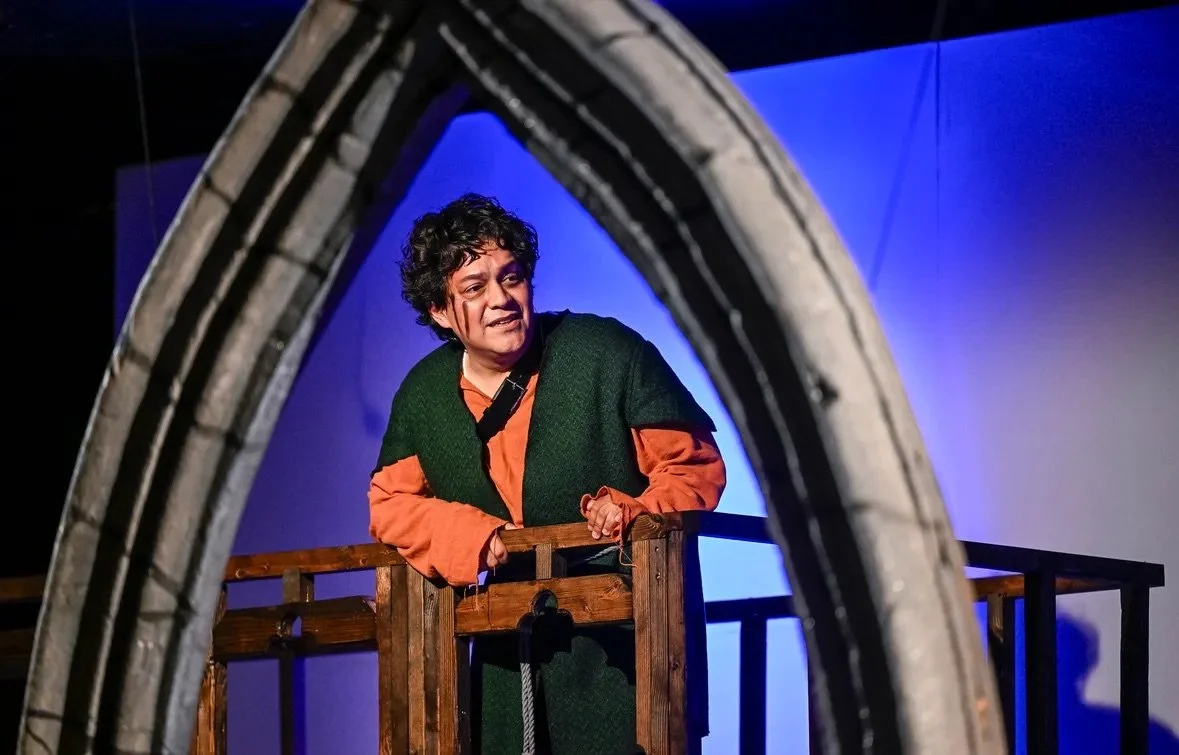
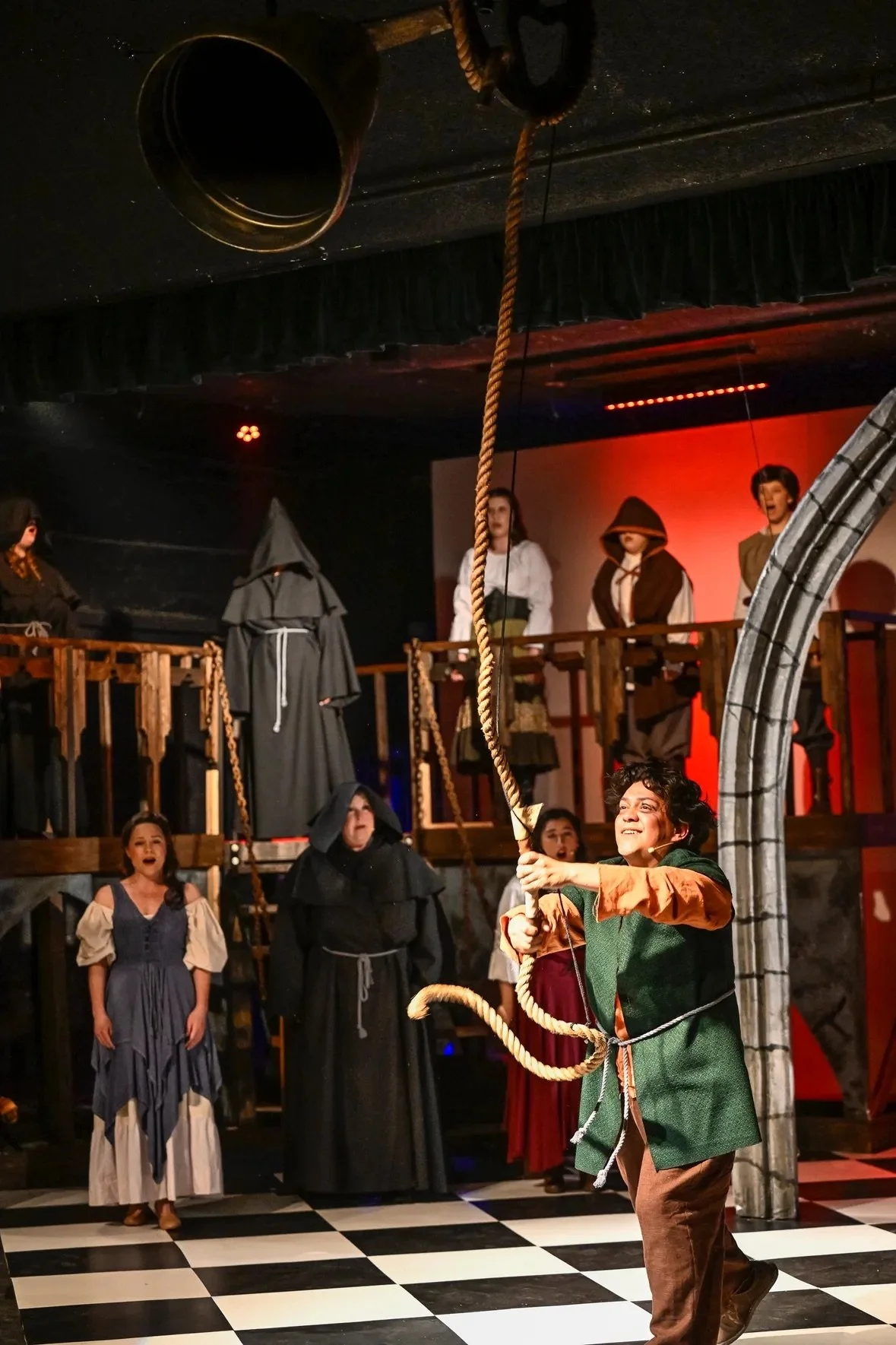
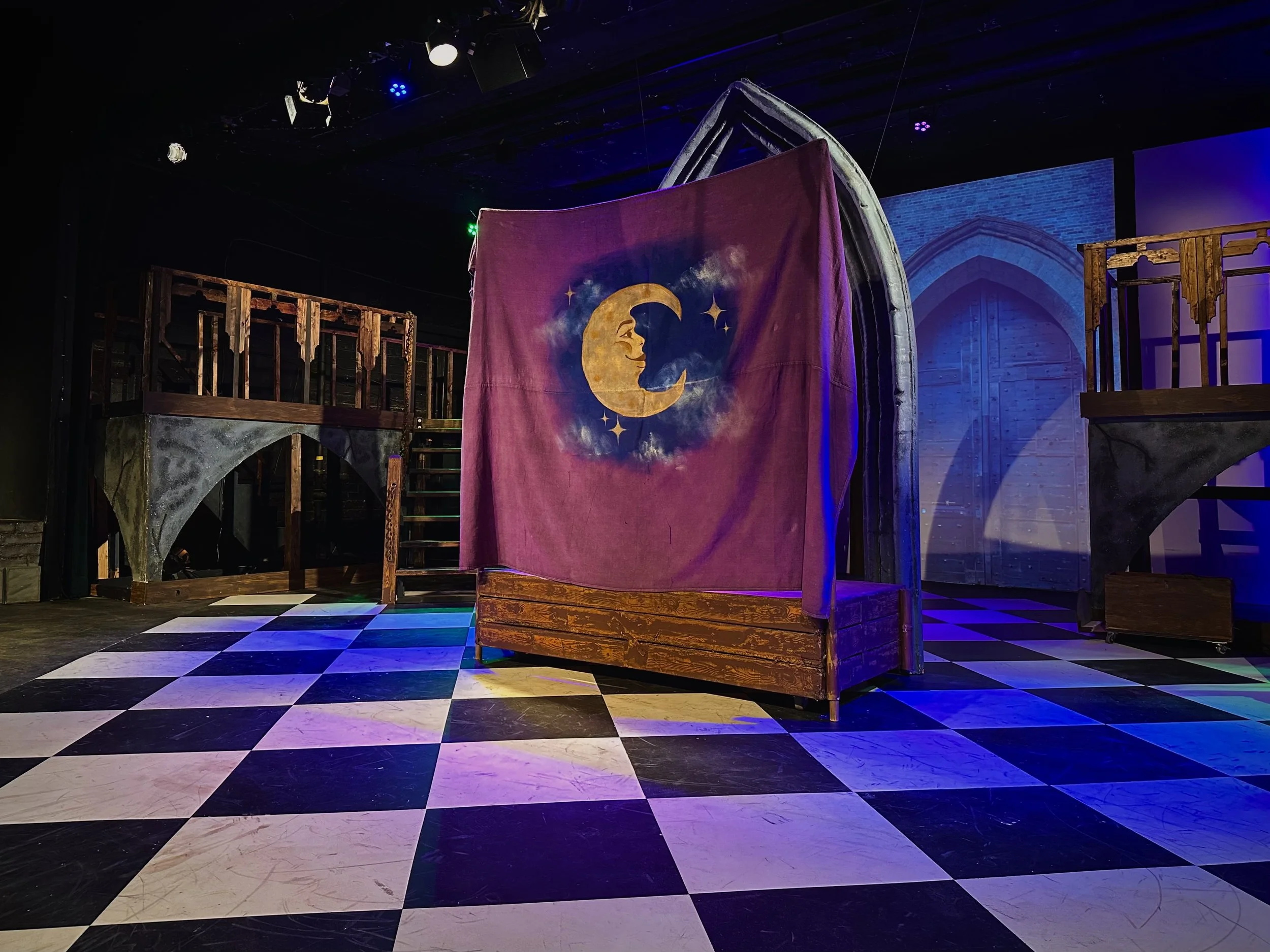
The scenic design was conceived as a multi-level unit set that could transform seamlessly between locations including the interior of the cathedral, the bell tower, the streets, and underground spaces. The physical structure included two levels, multiple platforms, four staircases, and functional bells that could be lowered into the playing space. One bell was practical, allowing a performer to pull the rope and swing the bell safely without producing sound.
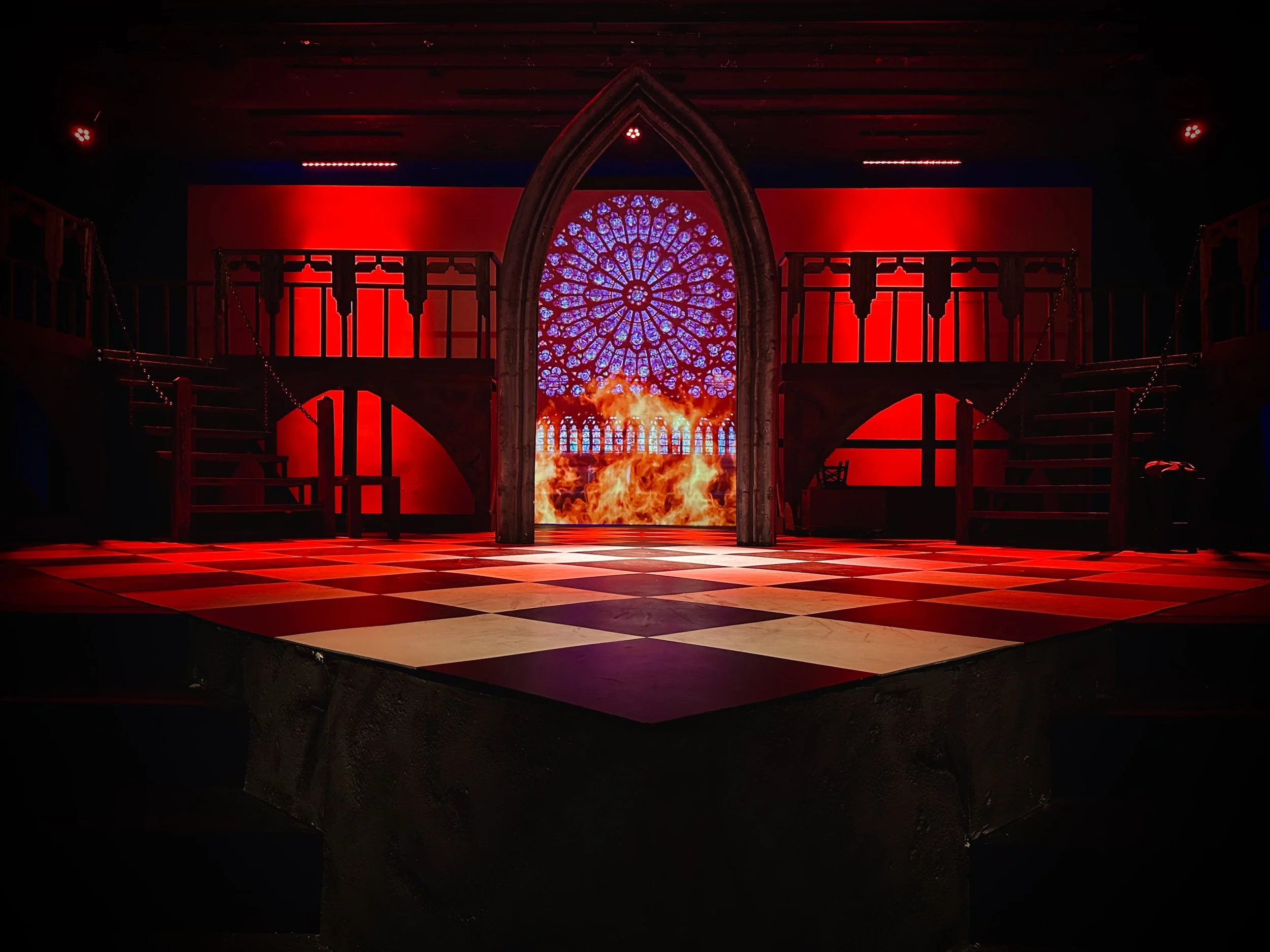
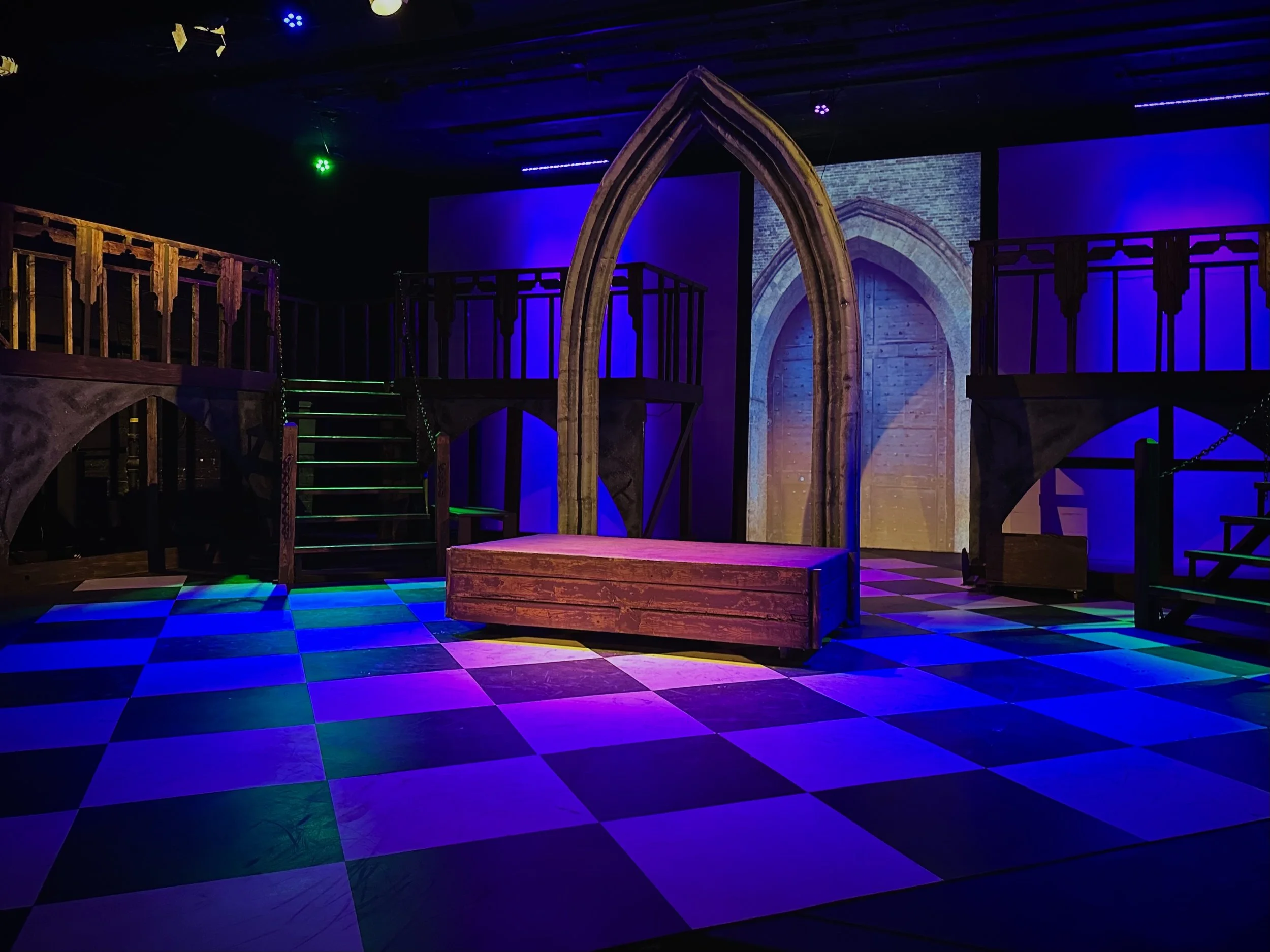
Media Integration and Storytelling
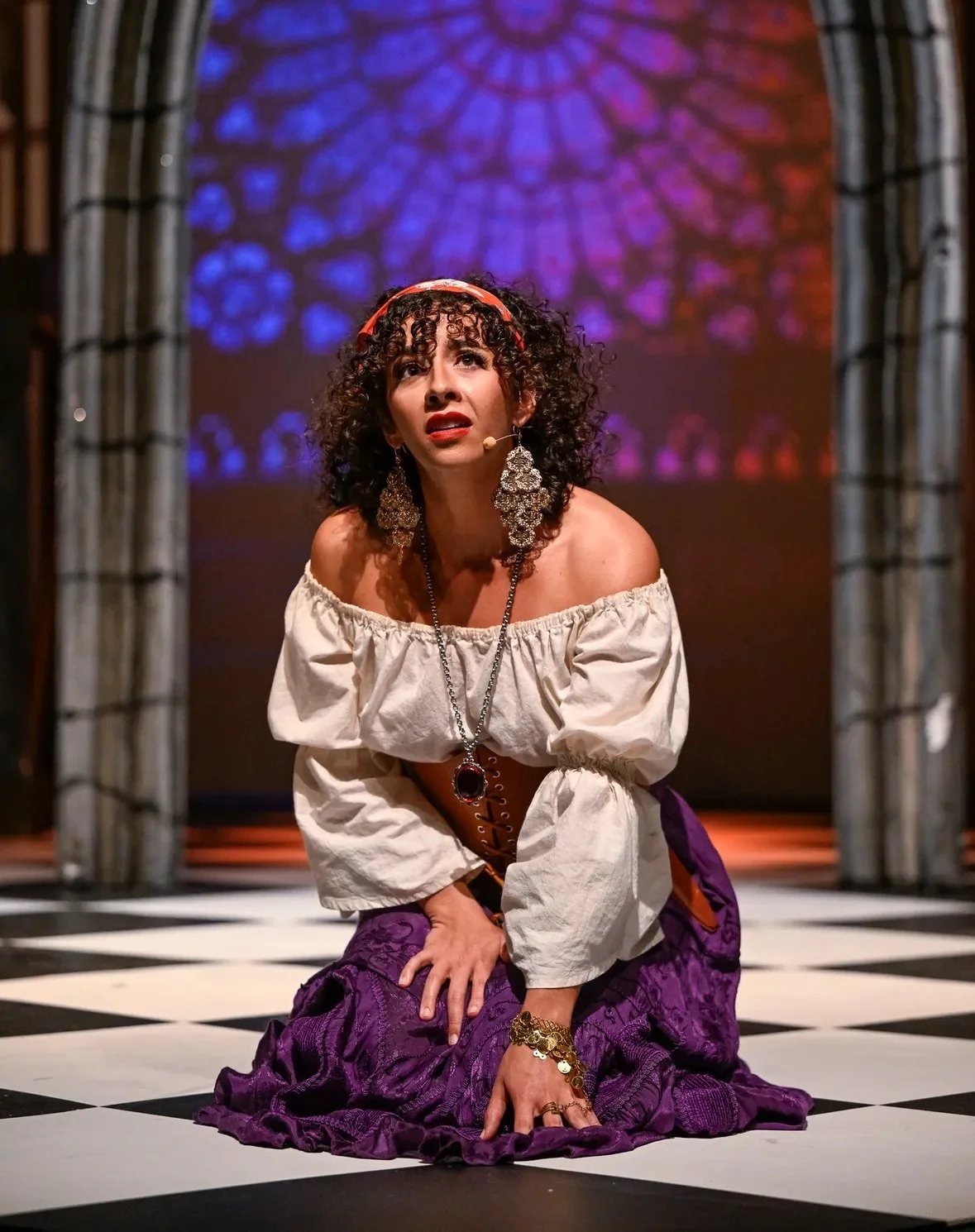
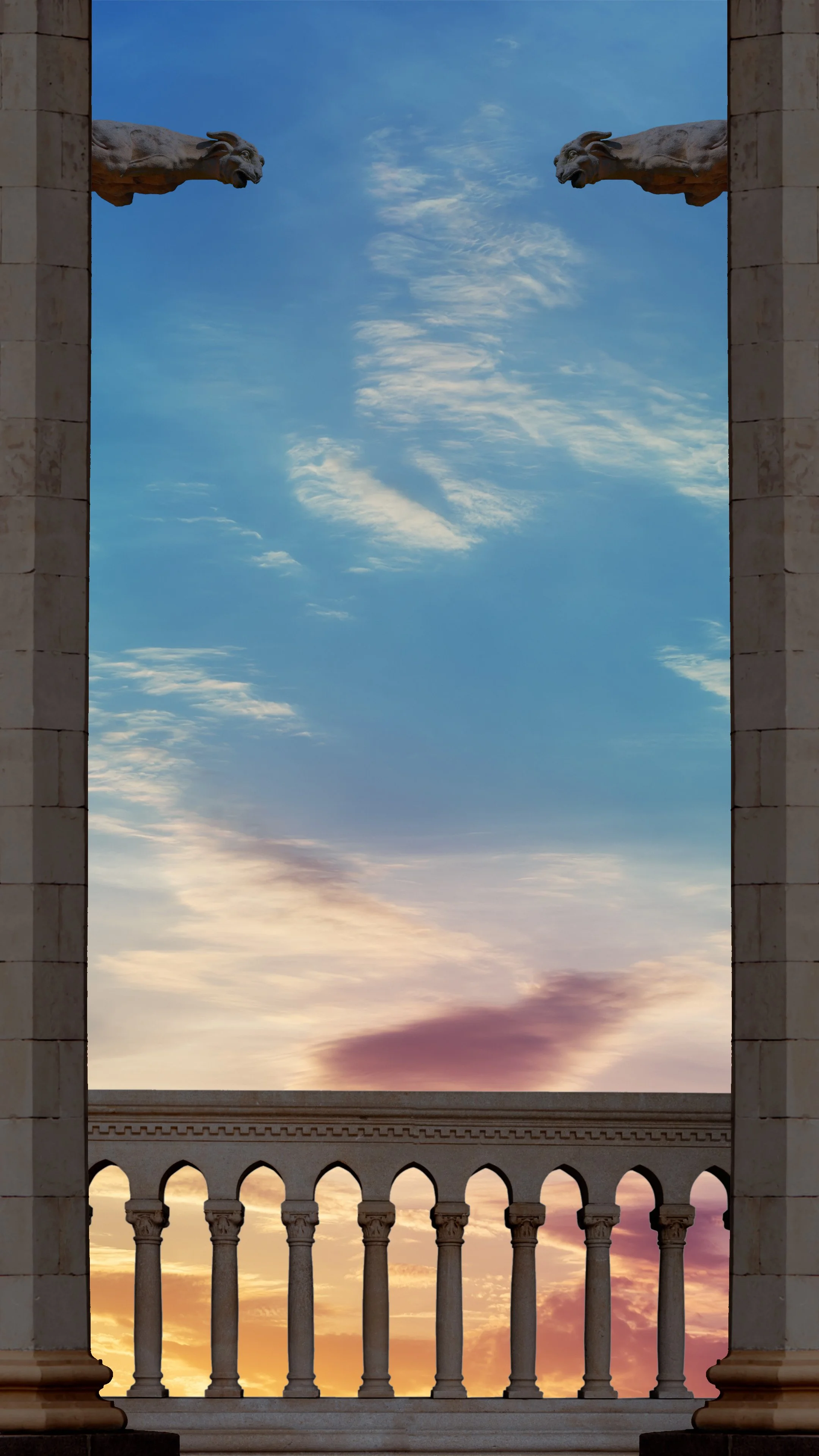
I designed and produced custom media content using Procreate, Photoshop, After Effects, and Premiere. The visuals were inspired by Walt Disney’s multi plane camera technique, with layered elements shifting at different speeds to create depth and perspective.
In a single cue, the audience could move from the rose window of the cathedral, rise through the rafters, pass the bell tower, and arrive in Quasimodo’s loft overlooking the city. The same system was used to represent stone walls, underground textures, cathedral doors, and Esmeralda’s amulet, allowing the audience to see what the characters were seeing.
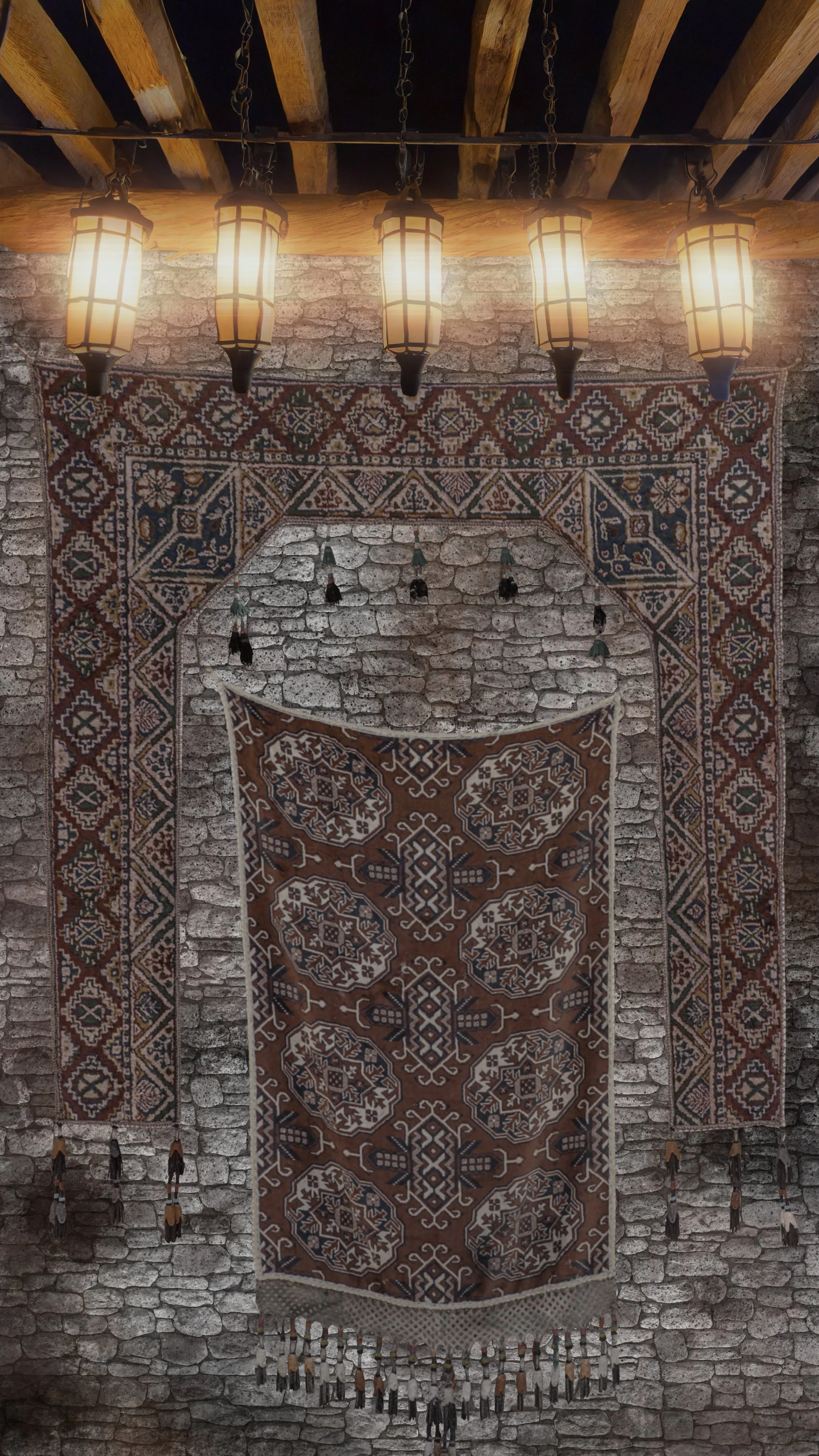
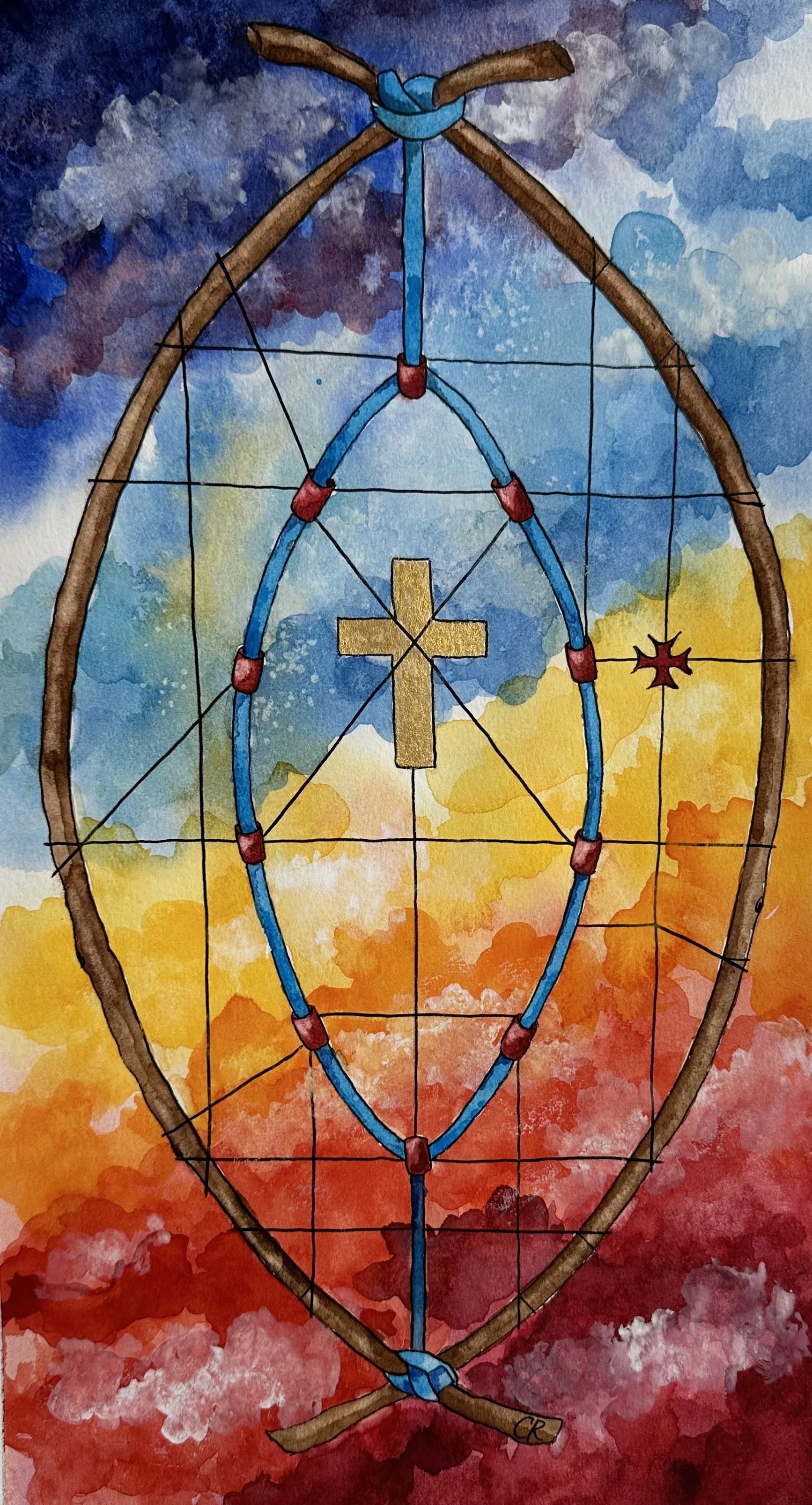
Original Watercolor Artwork by Christa Reiber
These moments were designed to envelop the audience and create the feeling of movement and transformation while remaining on a unit set.
Technical Direction and Coordination
One of the most complex moments was the opening ascent through the cathedral, timed precisely to the musical swell of the opening number. This required tight synchronization between a music operator, video operator, sound engineer, lighting technician, backstage fly team lowering the bells, and cues called by the stage manager.
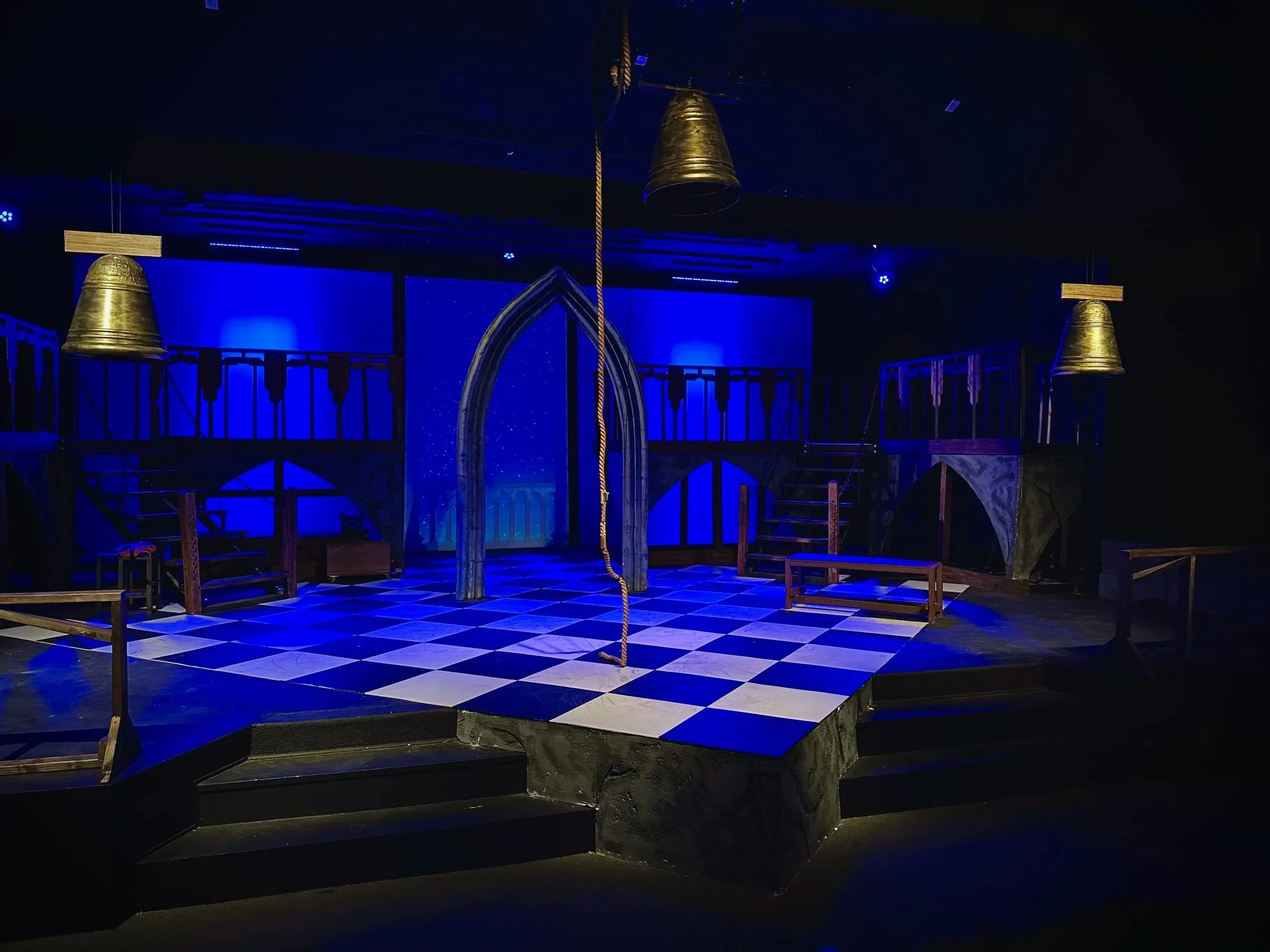
When executed correctly, this sequence was frequently compared by audiences to a theme park attraction due to the sensation of rising through the space.
Safety and Execution
Lowering the bells into the performance space was safety-critical. Each move required clear communication, visual monitoring of descent, and exact timing with performers, music, and media. Similar coordinated moments occurred throughout the show, reinforcing the need for consistency and trust across departments.
Outcome and Reflection
The integration of media proved to be the most impactful solution, allowing the production to achieve scale, transformation, and emotional resonance that would not have been possible through physical scenery alone.
The audience response was overwhelmingly positive, particularly to the projection elements and large scale visual moments. For many patrons, this production redefined what they expected from a community theater experience.
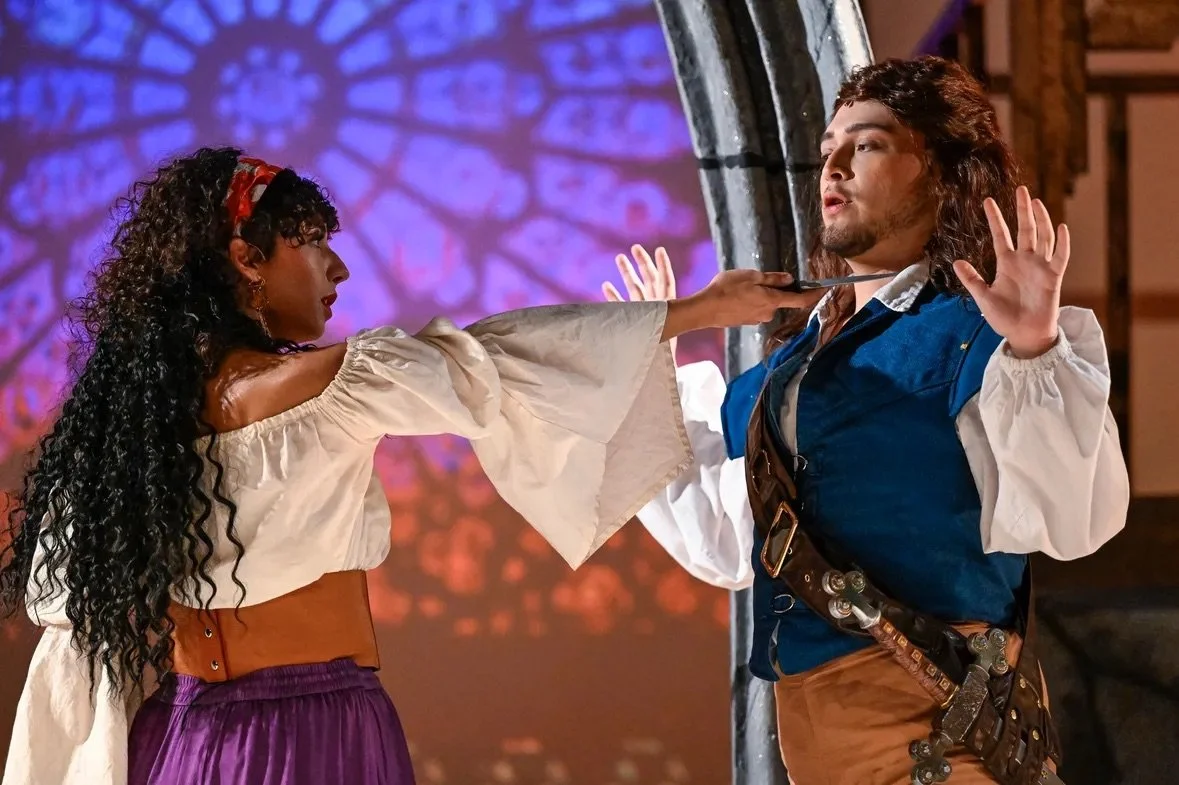
This production reinforced several lessons that continue to inform my work: don’t over exert yourself when collaboration can solve the problem better, establish clear directives across the creative team early, trust trained technicians with complex systems and give them ownership of their roles.