Wait Until Dark
Scenic Designer and Construction Lead
Ice House Theater - Visalia, CA
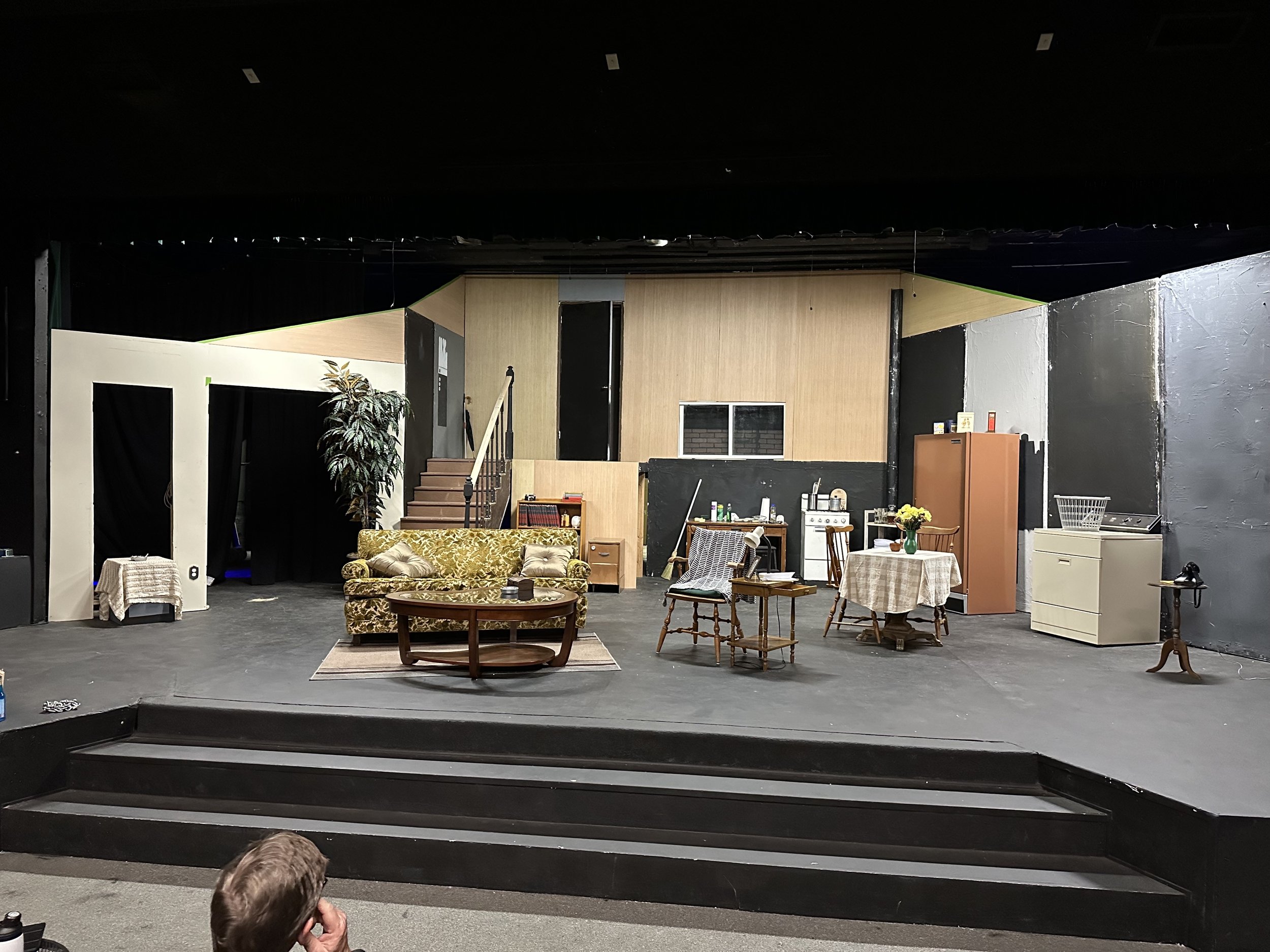
Wait Until Dark required a high-realism environment that could support suspense, danger, and extended sequences performed in near total darkness. The production was mounted at the Visalia Ice House Theater on a compressed two-month timeline with a total scenic budget of $1,500.
Director: Joseph Ham
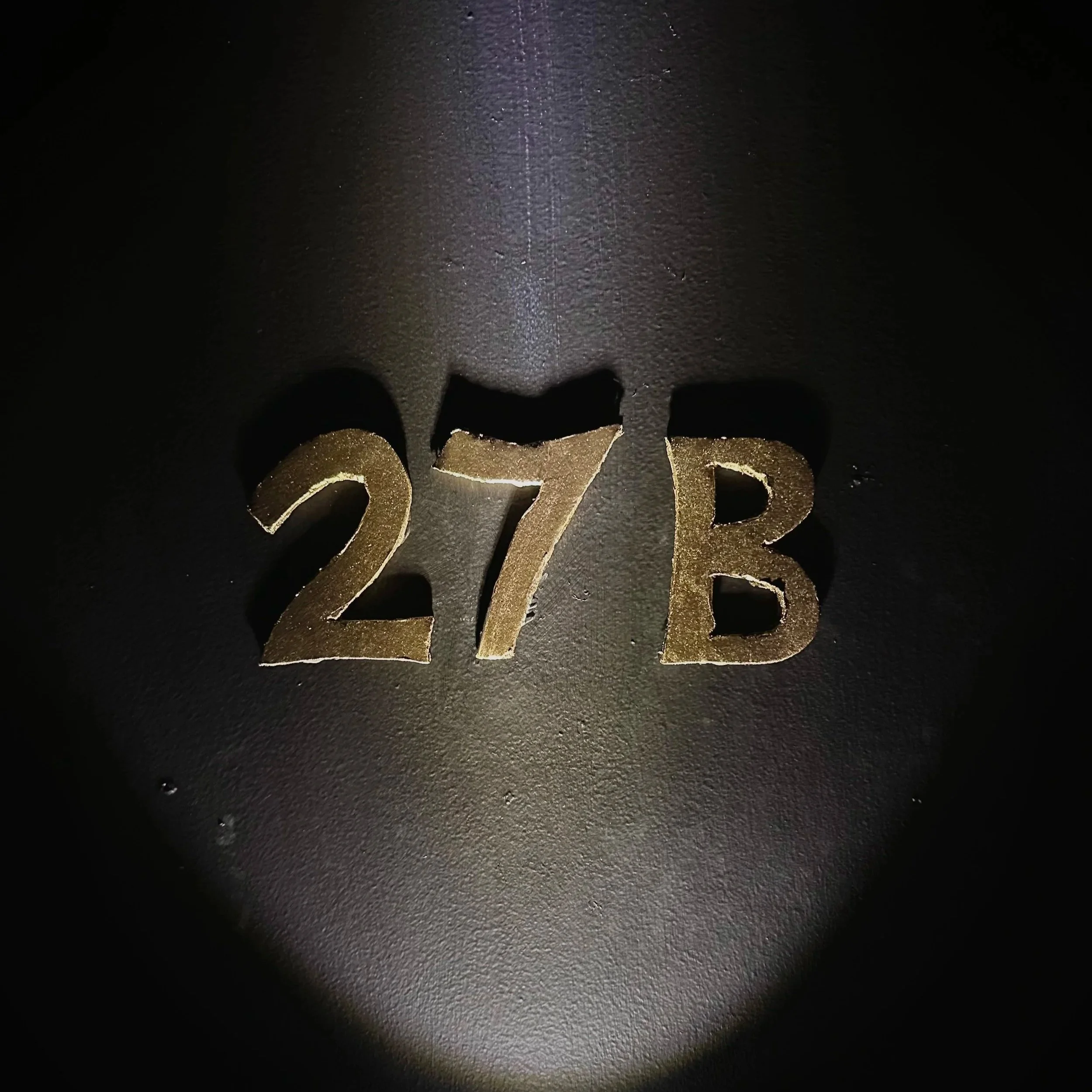
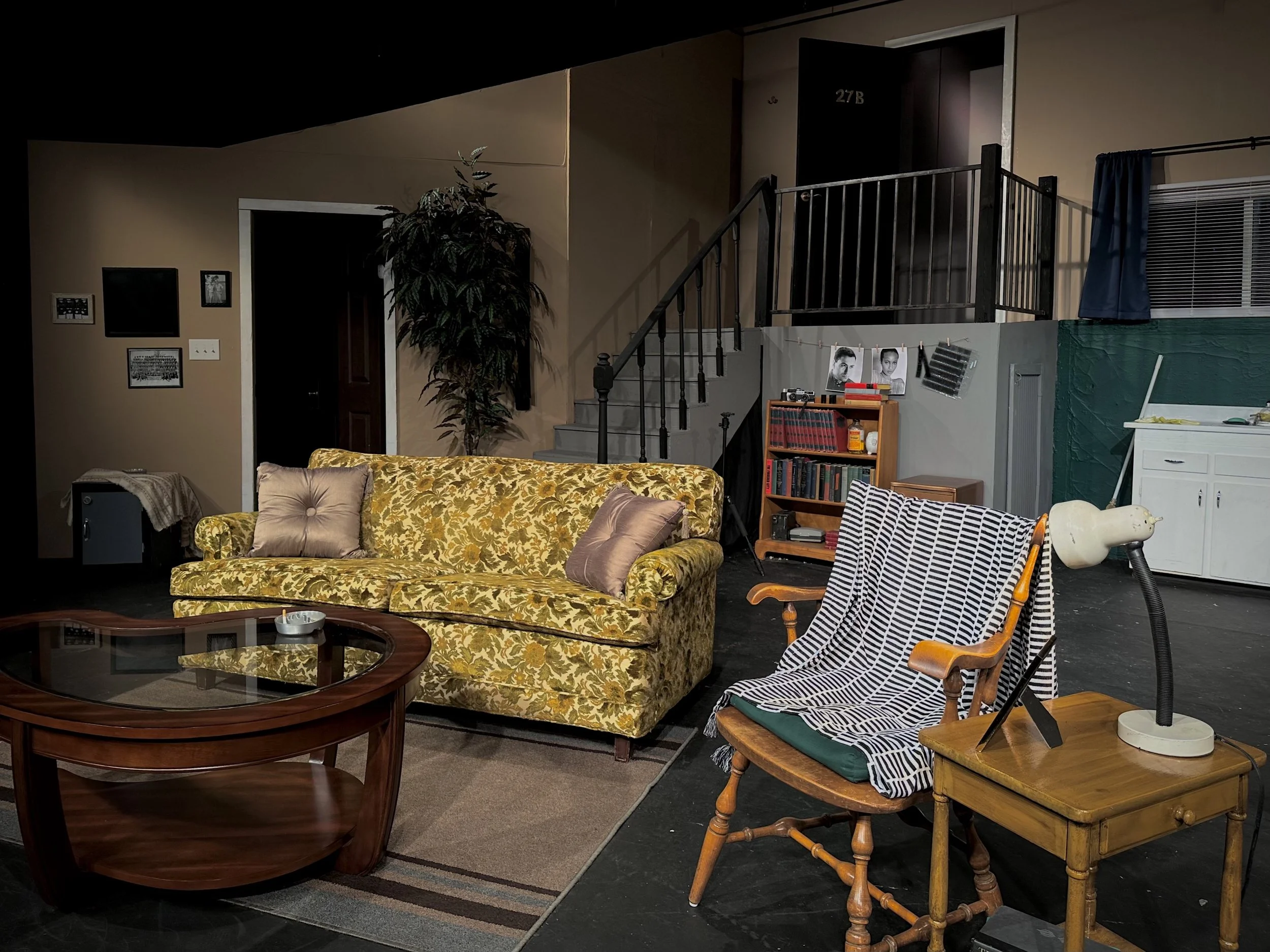
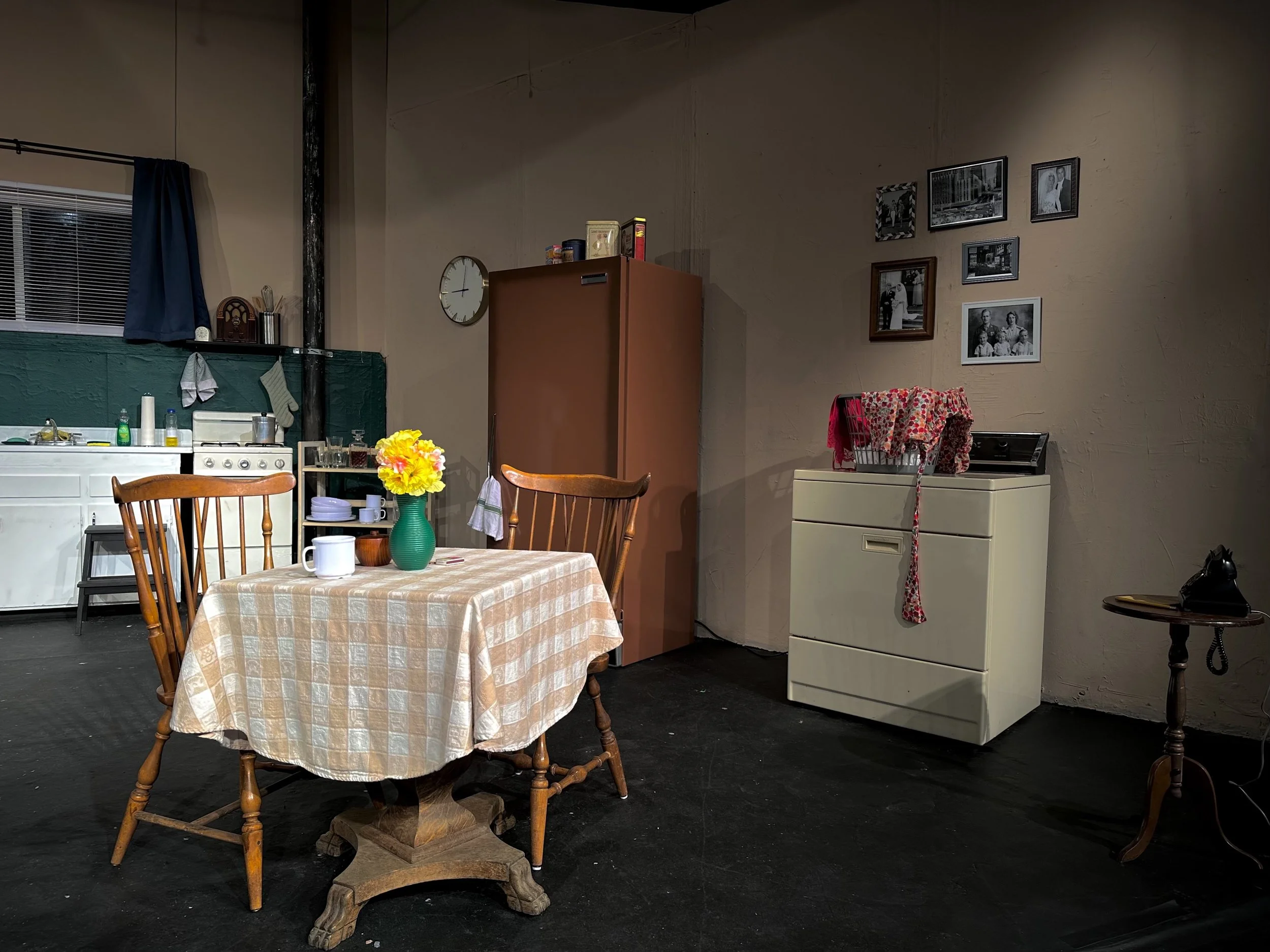
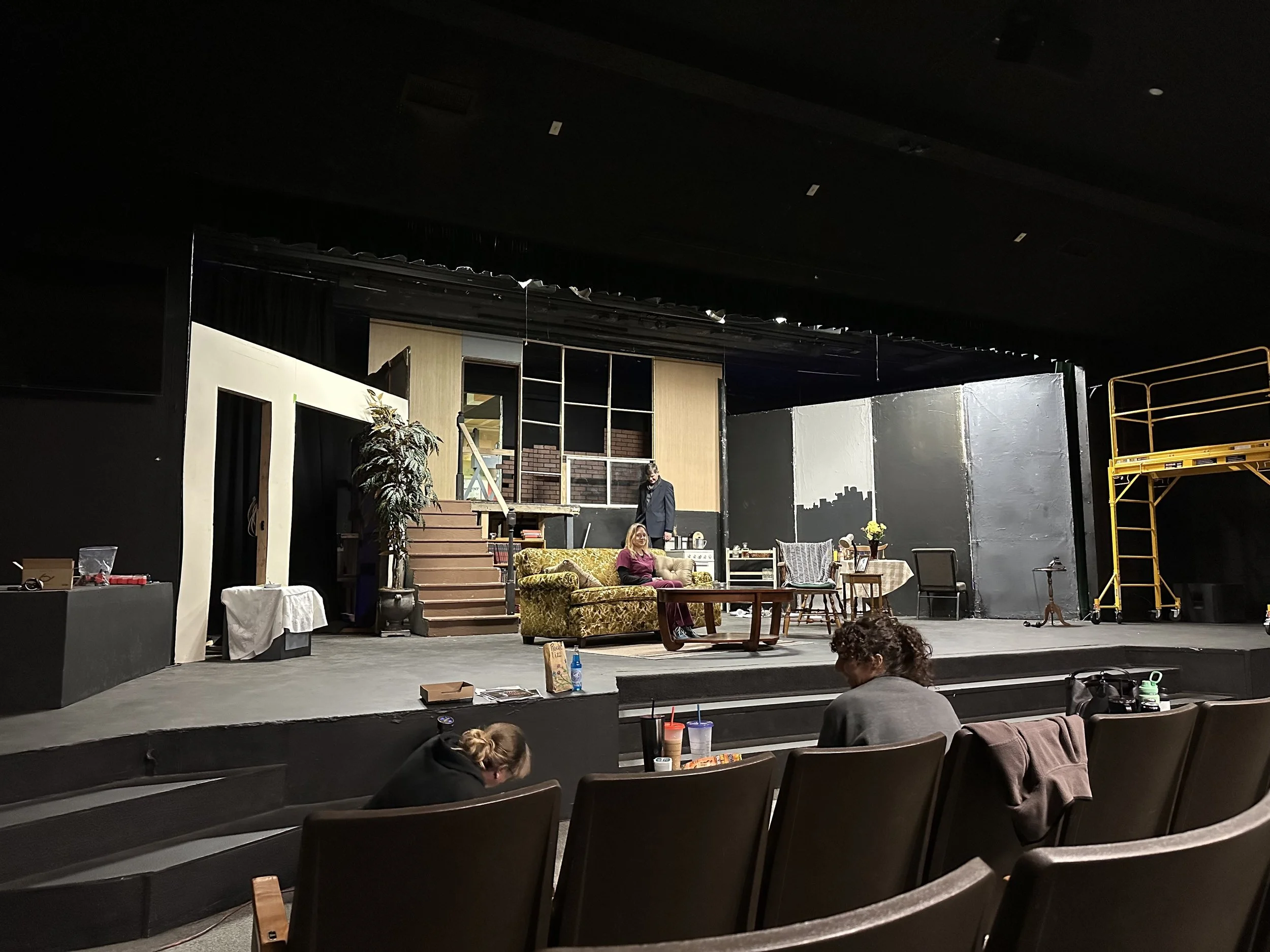
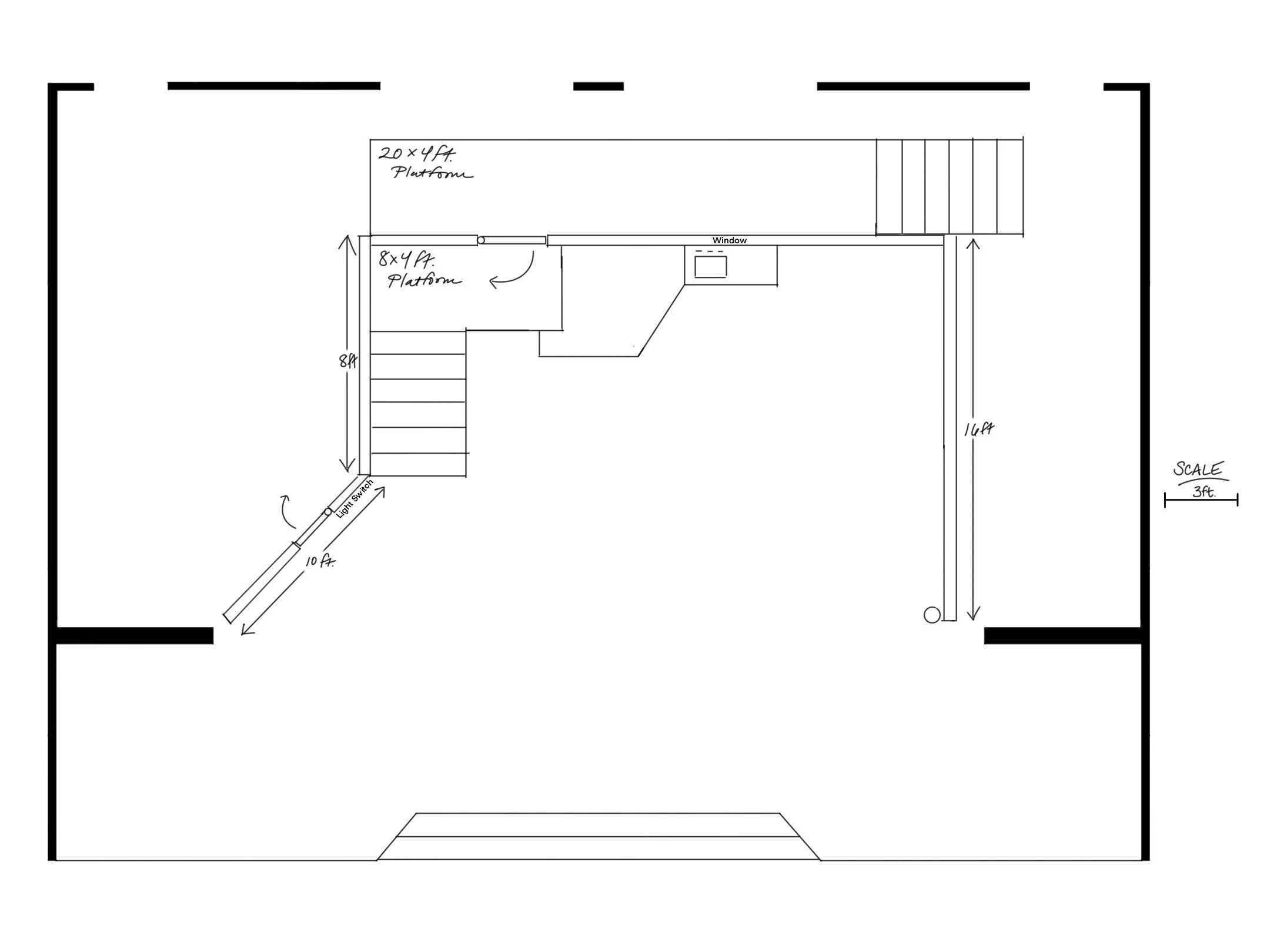
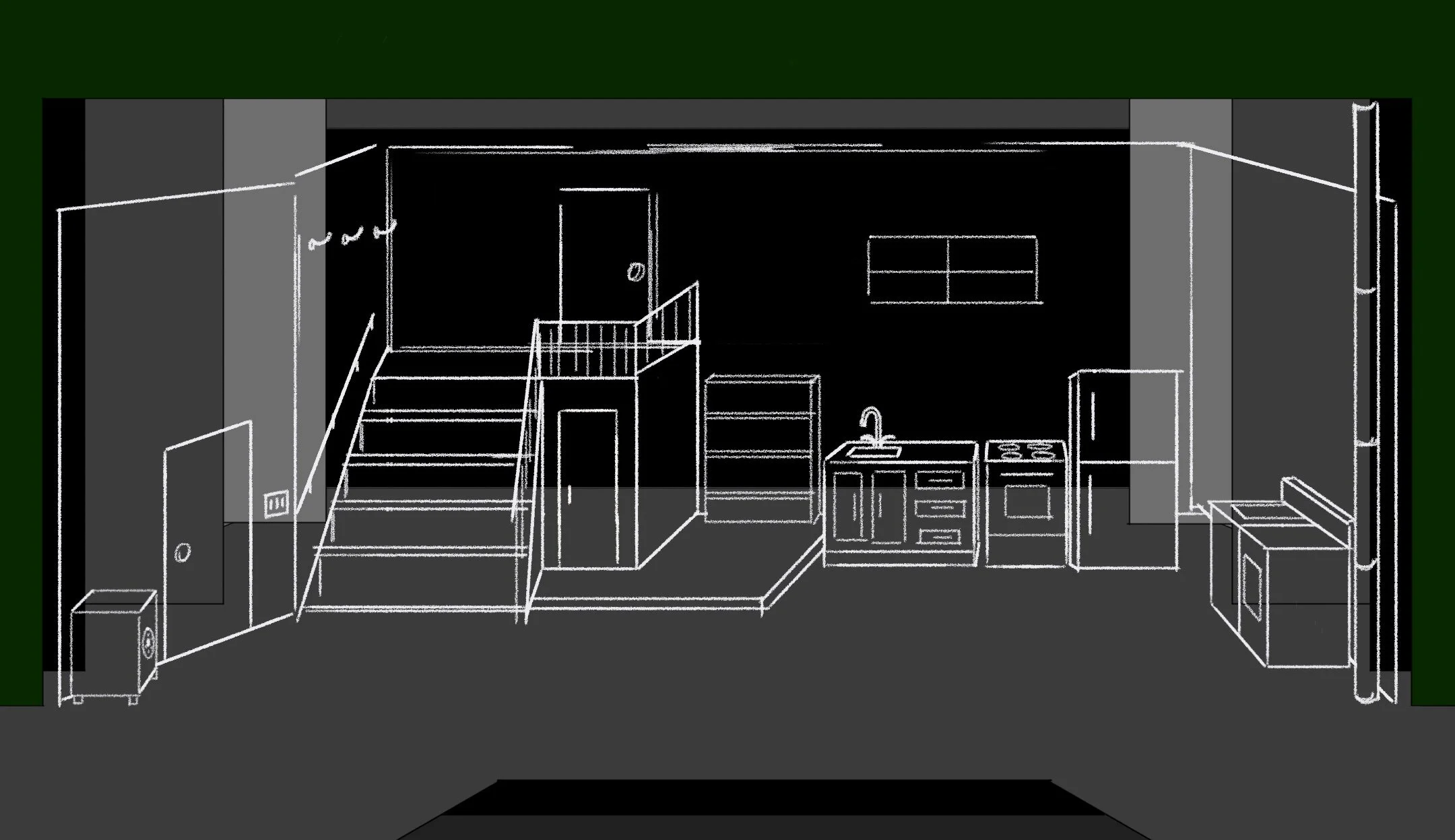
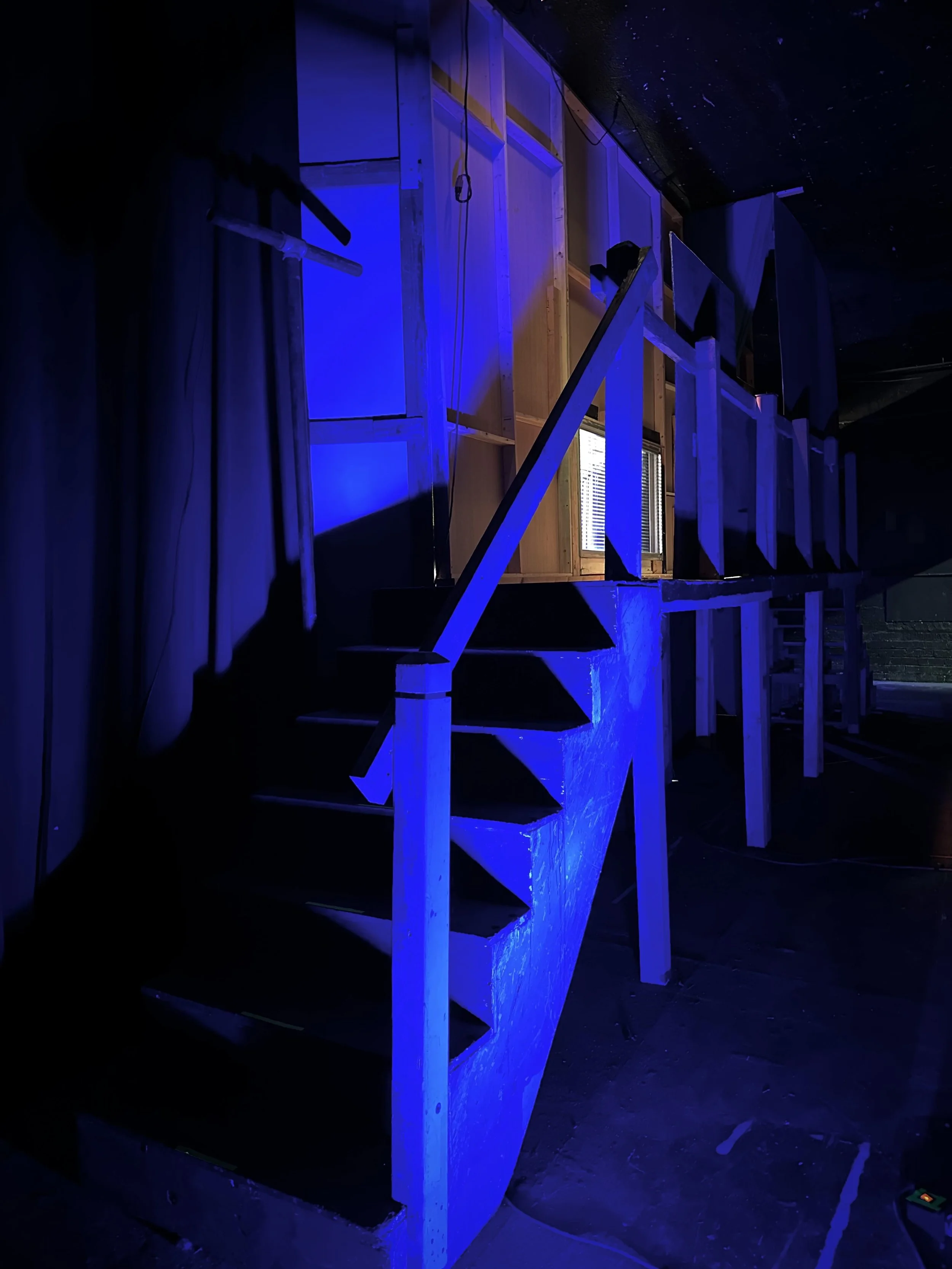
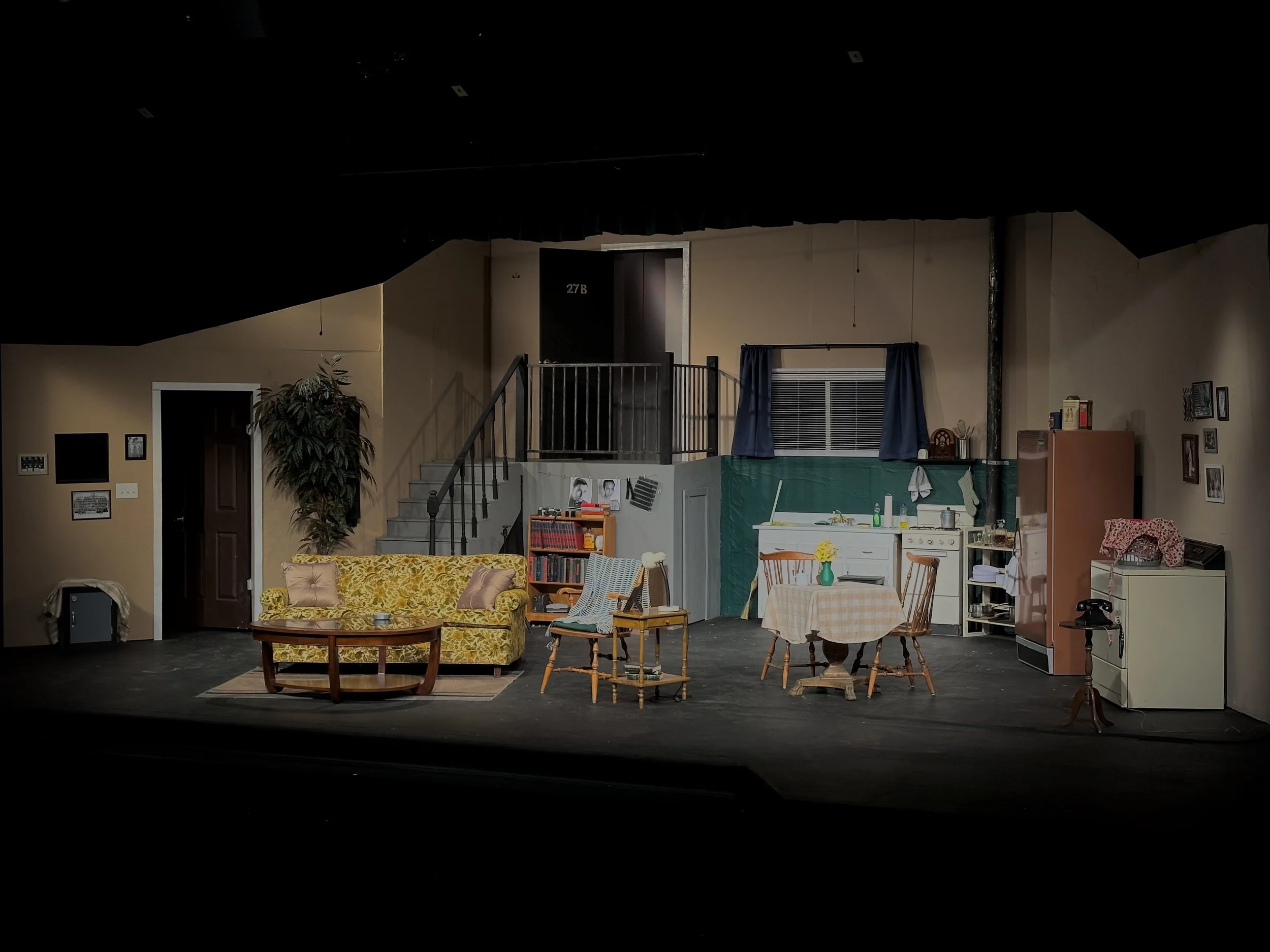
The central challenge was scale. The story takes place in a basement apartment, yet the action required a visible street level above the space, with characters appearing outside windows at eye level and entering from a door located above the apartment. This meant designing and building a split level apartment that read clearly as subterranean while fitting beneath a ceiling only twelve and a half feet above the stage.
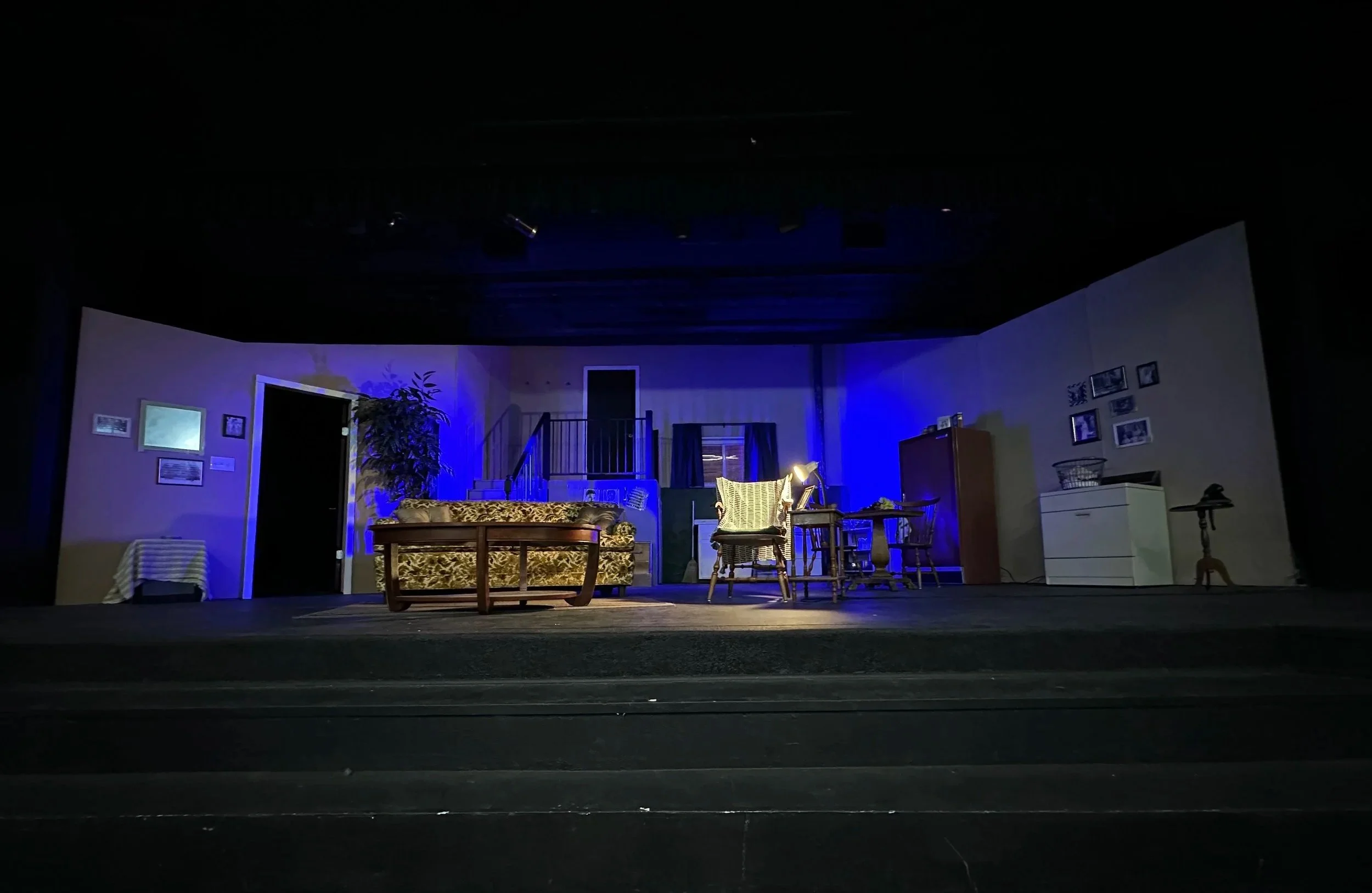
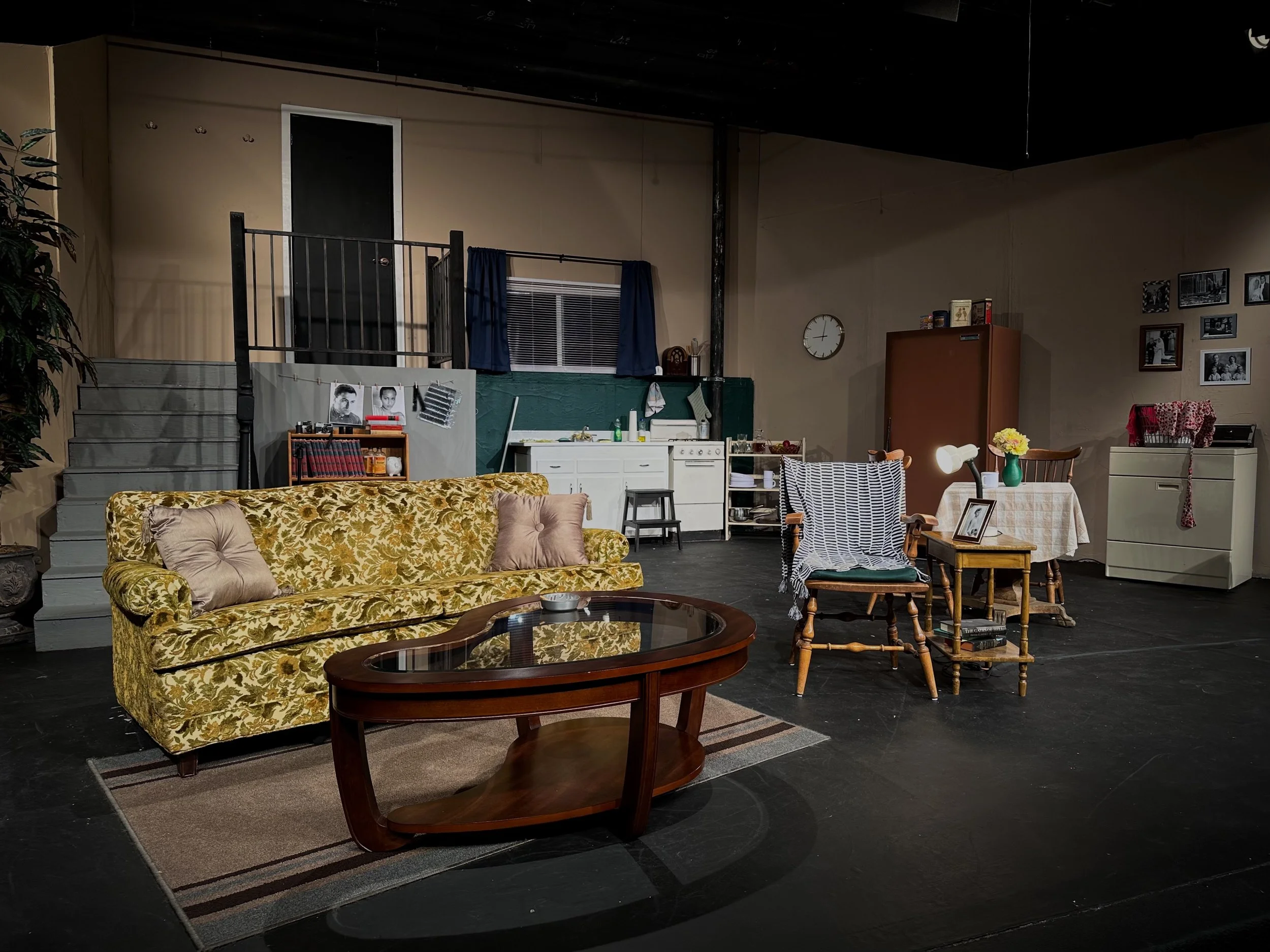
The final design embraced realism and density. The apartment was designed as a lived-in 1960s urban space, complete with period appropriate appliances, tight circulation paths, and multiple hiding places that allowed the actors to move stealthily throughout the environment. The walls rose nearly to the ceiling, enclosing the space and creating an intentionally confining atmosphere that placed the audience inside the apartment from the moment the lights came up.
Special attention was given to safety and usability in darkness. Much of the second act takes place in near total blackout, requiring careful coordination between scenic layout, lighting design, and actor movement. Textures, angles, and clear pathways were deliberately designed to support spatial awareness without visible light. Practical elements such as the refrigerator, safe, and washer and dryer were integrated as required story devices and used as sources of motivated light during key moments.
Safety in Design
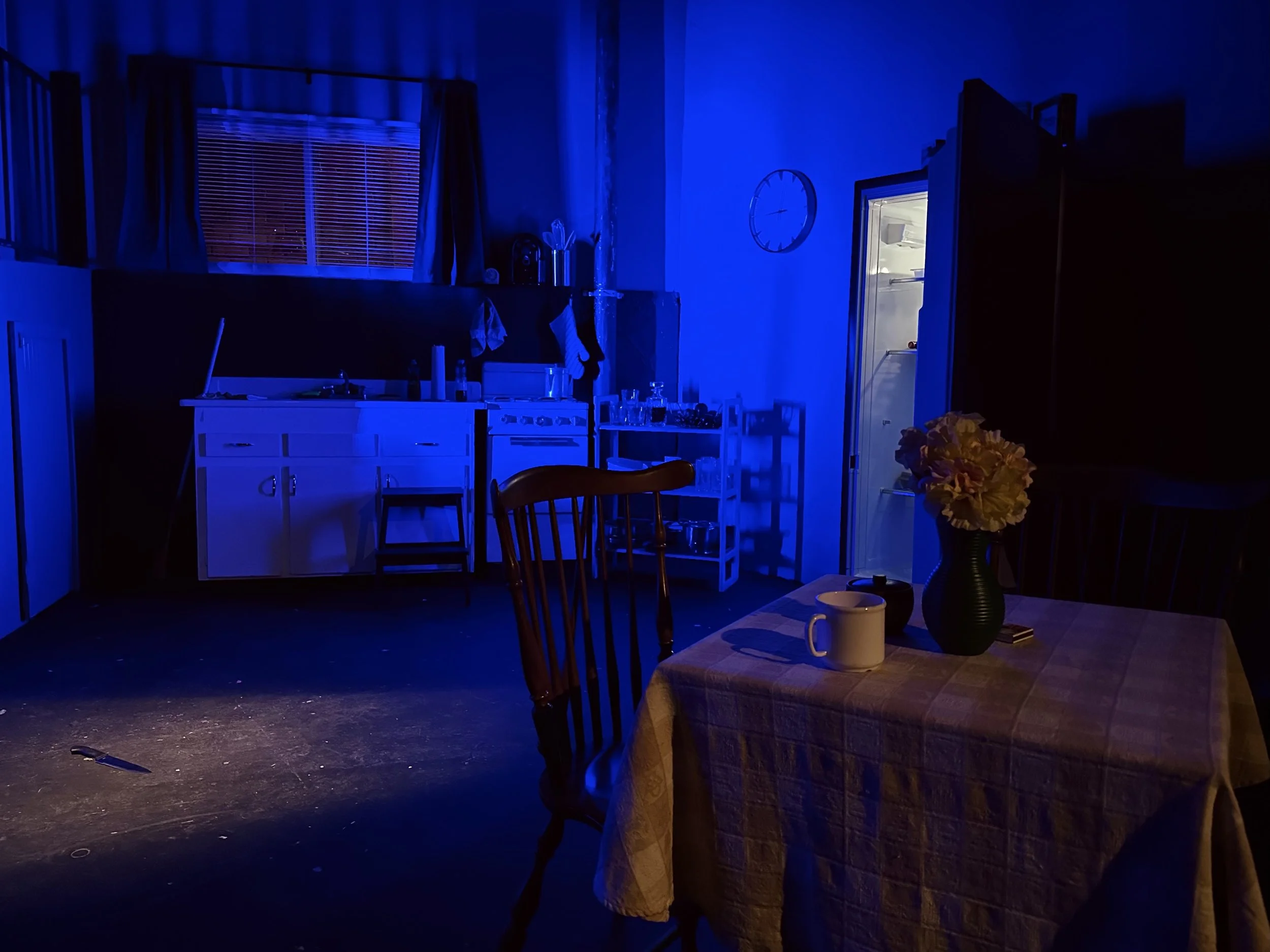
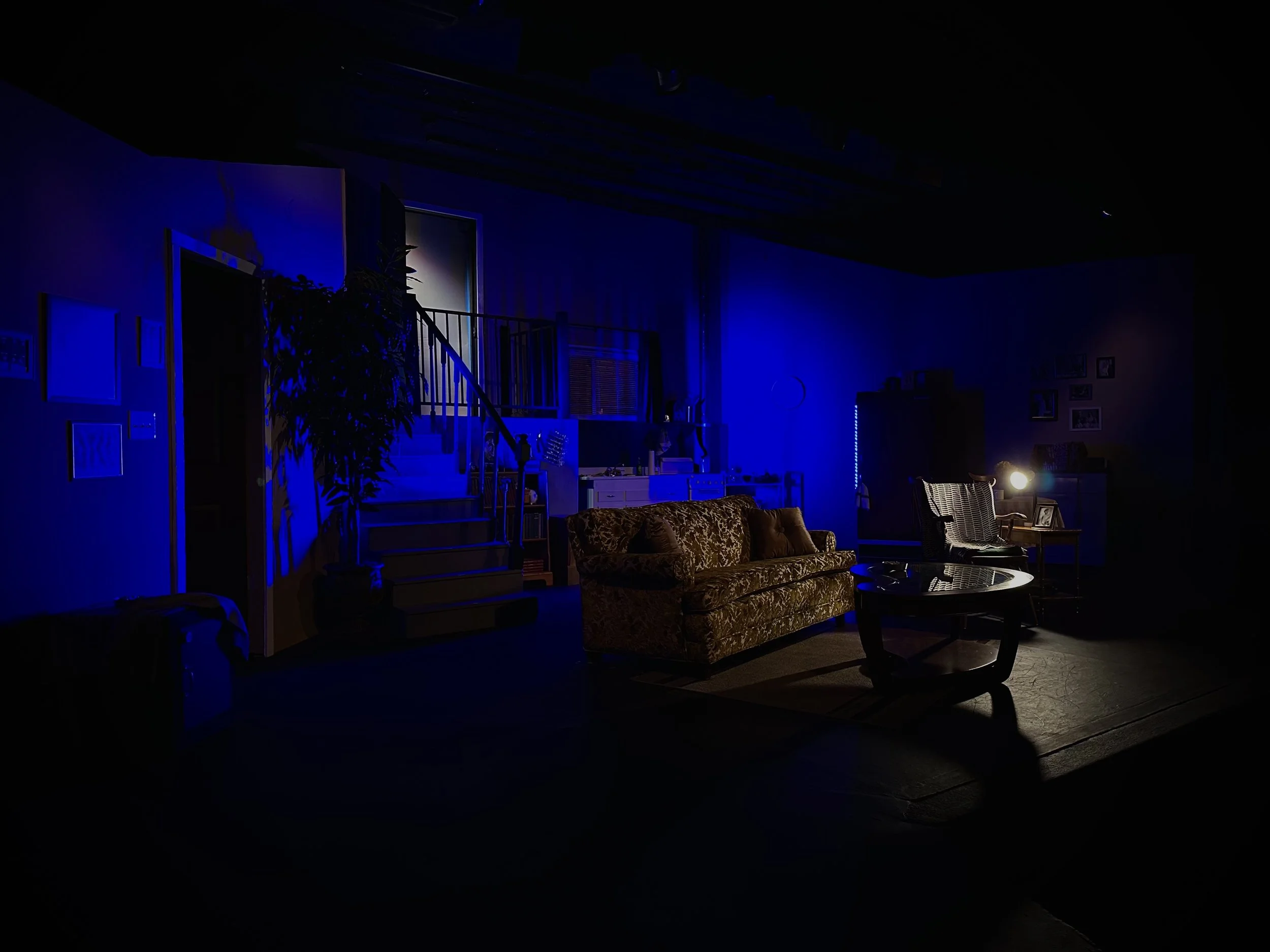
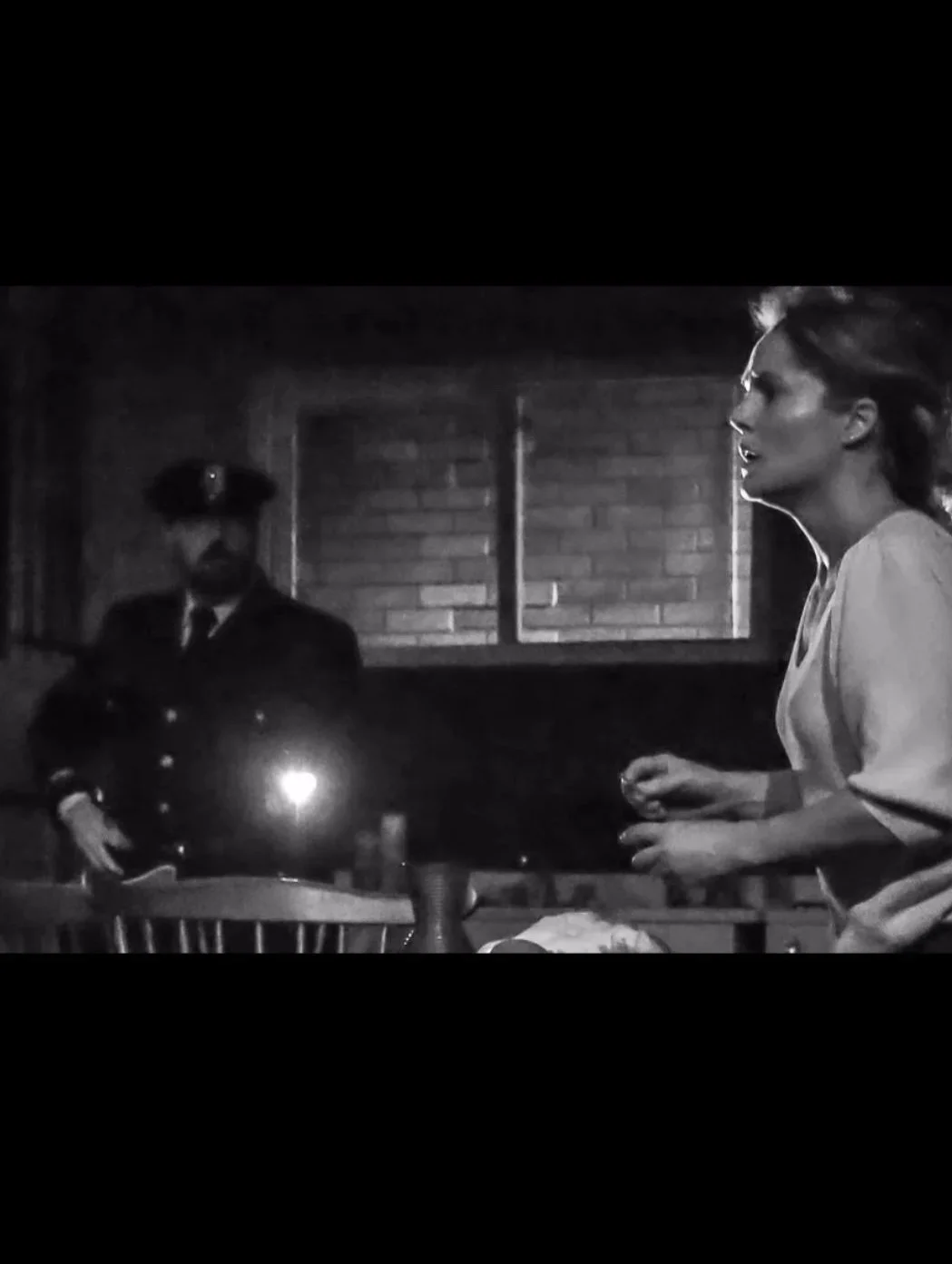
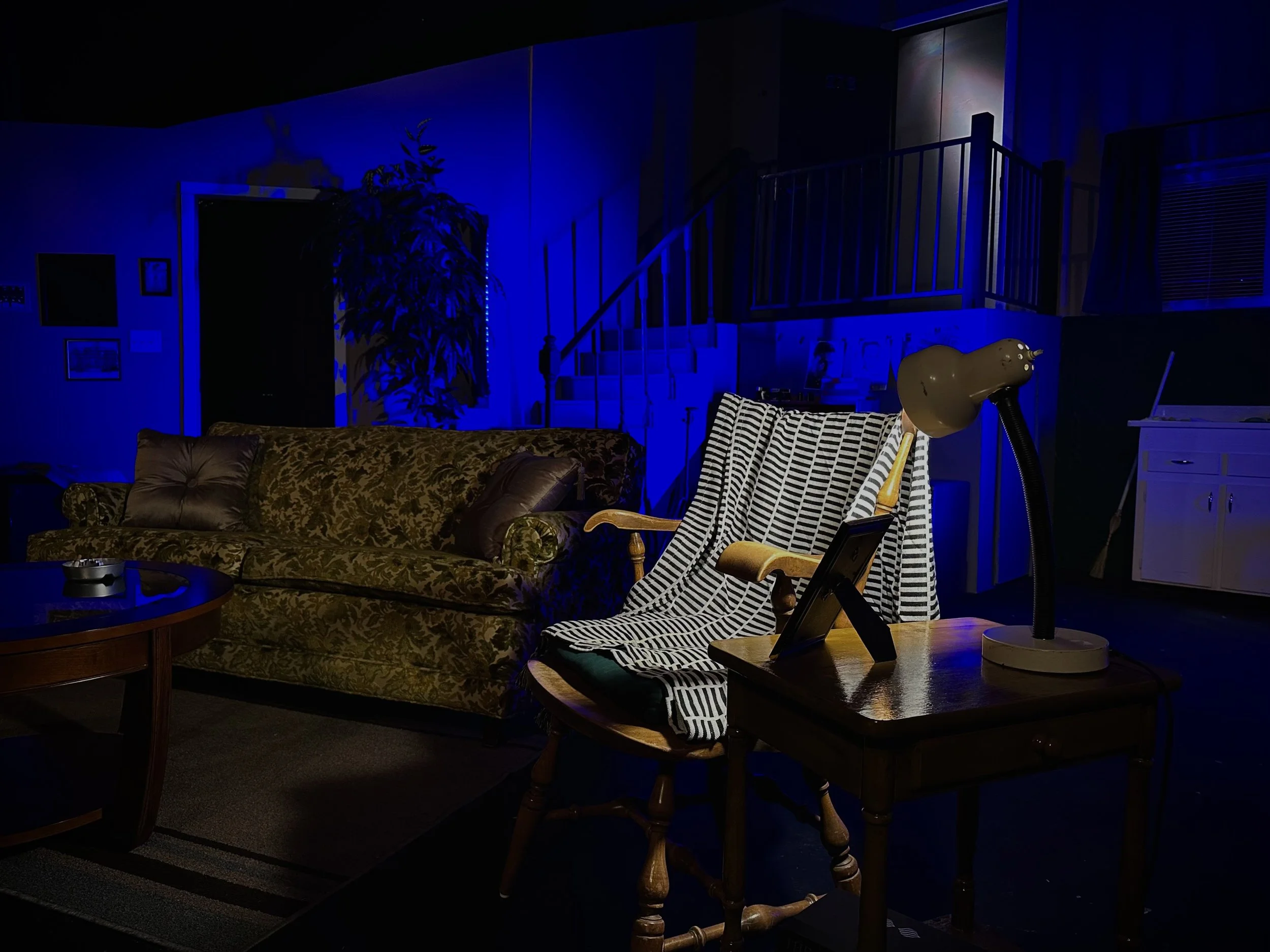
Sound design and scenic design worked together to heighten tension. Continuous rainfall effects were localized behind the set to reinforce the feeling of being sealed inside the apartment. Lighting and sound were used to sculpt moments of suspense, culminating in a final sequence that incorporated real flame against near complete darkness to intensify the stakes of the scene.
The scenic design of this project was conceived and built as a solo effort, making it a formative experience in planning, iteration, and execution. Extensive sketching and pre-planning ensured the build stayed efficient and avoided structural or safety compromises despite the ambitious scale. Audience response was strong, particularly from patrons familiar with the original material, who praised the atmosphere and realism of the space.
Outcome and Reflection

Wait Until Dark was a pivotal early large-scale build that reinforced the importance of planning ahead, designing for safety, and thinking holistically about how performers interact with space.